Sport & entertainment · Famous people of the world
Karl Marx マルクス
まるくす
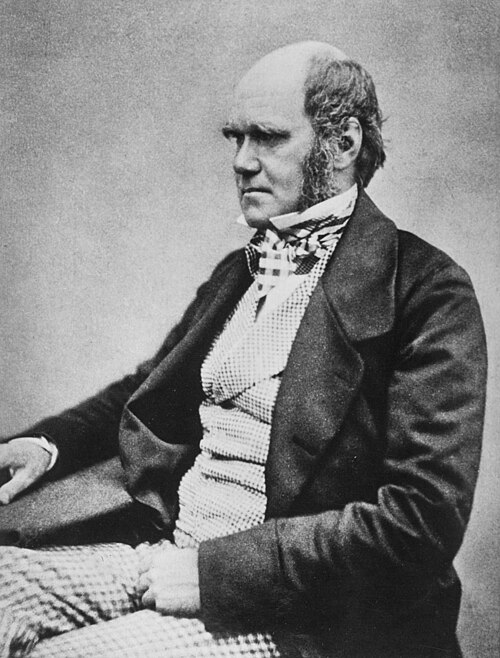
Karl Marx (1818–1883) was a German philosopher, economist and political theorist. With Friedrich Engels he wrote The Communist Manifesto (1848), and his Capital analysed the capitalist economy. His thought is the basis of Marxism and profoundly shaped 20th-century history, including in Vietnam.
- Birthplace
- Trier, Prussia (now Germany)
- Field
- Philosophy, political economy, sociology
- Major works
- The Communist Manifesto (1848); Capital, vol. 1 (1867)
From Trier to London
Marx was born in Trier to a lawyer's family of Jewish origin. He studied law and philosophy in Bonn and Berlin, came under Hegel's influence and earned a doctorate in 1841. Barred from an academic career, he turned to journalism; the Rheinische Zeitung he edited was shut down by the Prussian authorities in 1843.
He lived in exile in Paris and Brussels and from 1849 settled in London. His family was often poor and relied on Engels's financial help; several of his children died young. Marx died in London in 1883.
Main ideas
Marx developed a materialist conception of history: the way people produce wealth shapes society, and history is driven by class struggle. The Manifesto ends with the call 'Workers of the world, unite!'.
In Capital he analysed commodities, value and surplus value, arguing that capitalists' profit comes from workers' unpaid labour, and predicted that capitalism would give way to a classless society. Volumes 2 and 3 were edited and published by Engels after his death.
Influence and debate
Marx's ideas became the official ideology of the Soviet Union, China and other socialist states, and also influenced labour movements, social-democratic parties and the fields of sociology, history and economics.
The 20th-century attempts to put Marxism into practice and his economic predictions remain subjects of major debate among scholars of different persuasions.
Links with Vietnam and Japan
In Vietnam, Marxism-Leninism together with Ho Chi Minh Thought is the ideological foundation of the Communist Party under the constitution. Marxist-Leninist philosophy and political economy are compulsory university subjects, and the name 'Các Mác' (from the French spelling) is widely known.
In Japan Capital was fully translated in the 1920s, and Marxian economics was a strong school in post-war Japanese universities. A manga version in the 'Manga de Dokuha' series has also introduced the work to many readers.
Vocabulary corner
Name: Japanese カール・マルクス, Vietnamese Karl Marx or Các Mác.
Vocabulary: 資本論 (Shihonron, Capital), 共産党宣言 (Kyōsantō sengen, Communist Manifesto), 資本主義 (shihon shugi, capitalism), 社会主義 (shakai shugi, socialism), 階級闘争 (kaikyū tōsō, class struggle), 剰余価値 (jōyo kachi, surplus value), 唯物史観 (yuibutsu shikan, historical materialism).