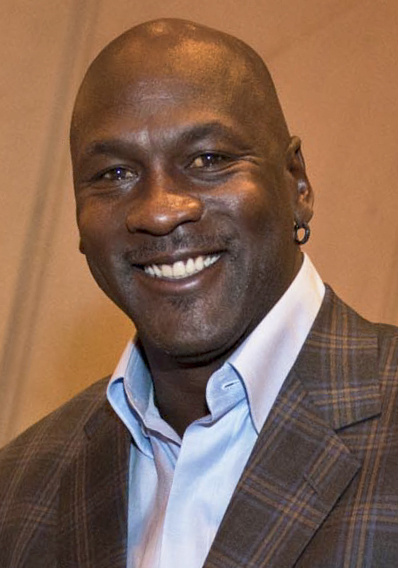
Sport & entertainment · Famous people of the world
Muhammad Ali モハメド・アリ
もはめど・あり
Muhammad Ali (1942–2016), born Cassius Clay, was an American boxer, a three-time world heavyweight champion widely regarded as the greatest boxer of the 20th century. Outside the ring he was known for refusing the draft for the Vietnam War in 1967, for his civil-rights activism and for his quick wit.
- Birth name
- Cassius Marcellus Clay Jr.
- Hometown
- Louisville, Kentucky, USA
- Field
- Boxing (heavyweight)
Louisville youth and Olympic gold
Cassius Marcellus Clay Jr. was born on 17 January 1942 in Louisville, Kentucky, in the segregated South. His father painted signs and his mother worked as a domestic. At 12, after his bicycle was stolen, he told police officer Joe Martin he would 'whup' the thief; Martin, who also trained boxers, suggested he learn to box first.
Clay progressed quickly, winning amateur titles including the Golden Gloves. In 1960, aged 18, he won the light-heavyweight gold medal at the Rome Olympics and turned professional the same year, backed by a group of Louisville businessmen and trained by Angelo Dundee.
He was different from the start: a big man who moved like a lightweight, kept his hands low, slipped punches by leaning back, and boasted constantly, writing verses predicting the round in which opponents would fall – hence the nickname 'the Louisville Lip'.
Champion, Islam and a new name
On 25 February 1964 the 22-year-old Clay challenged heavyweight champion Sonny Liston, a heavy favourite. Beforehand he promised to 'float like a butterfly, sting like a bee', a line associated with his cornerman Drew 'Bundini' Brown. Liston failed to answer the bell for the seventh round, and Clay became world heavyweight champion, shouting 'I am the greatest!'.
Soon afterwards he announced that he had joined the Nation of Islam, a Black American Muslim movement, rejected Cassius Clay as a 'slave name' and took the name Muhammad Ali. Many journalists and even opponents refused to use it, but he defended his title repeatedly over the next three years. In 1975 he converted to Sunni Islam and later drew close to Sufism.
Refusing the Vietnam draft
In 1966, reclassified as eligible for the draft as the US escalated the Vietnam War, Ali declared that he had no quarrel with the Viet Cong – widely quoted as 'I ain't got no quarrel with them Viet Cong'. On 28 April 1967 in Houston he refused to step forward when his name was called at his induction, citing his religious beliefs and opposition to the war.
The consequences were immediate: he was stripped of his title and boxing licences, convicted of draft evasion and sentenced to five years in prison (free on appeal), and lost three and a half years of his prime, from 25 to 28. He spoke on college campuses and became a symbol of both the anti-war and civil-rights movements.
On 28 June 1971 the Supreme Court overturned his conviction 8–0 in Clay v. United States on procedural grounds – the draft board had not stated why it rejected his exemption claim – without ruling on the merits. By then American opinion on Vietnam had shifted, and the man once called a traitor was increasingly seen as someone who paid a price for his conscience.
Legendary fights
Returning in 1970, Ali met champion Joe Frazier at Madison Square Garden on 8 March 1971 in the 'Fight of the Century'. Frazier knocked him down in the 15th round and won on points – Ali's first professional defeat.
On 30 October 1974 in Kinshasa, Zaire (now DR Congo), the 32-year-old Ali faced the younger, harder-hitting George Foreman in the 'Rumble in the Jungle'. Using his 'rope-a-dope' tactic – leaning on the ropes and covering up while Foreman punched himself out – he knocked Foreman out in the eighth round to regain the title. The crowd's chant 'Ali, bomaye!' ('Ali, kill him!') became legendary.
On 1 October 1975 his third fight with Frazier, the 'Thrilla in Manila', took place in brutal heat; Frazier's trainer Eddie Futch stopped it before the 15th round. Ali later said it was the closest he had come to dying. In 1978 he lost to Leon Spinks and won the rematch the same year, becoming the first three-time heavyweight champion. He retired in 1981 after punishing defeats by Larry Holmes and Trevor Berbick, with a record of 56 wins (37 KOs) and 5 losses.
Parkinson's and later life
In 1984 Ali announced that he had Parkinson's syndrome. Many believed the blows he absorbed in the ring contributed, though he and his doctors did not say so definitively. His famous voice faded, but he remained active in humanitarian work, travelling widely and undertaking unofficial diplomacy such as a trip to Baghdad in late 1990, opposed by the George H. W. Bush administration, after which 15 American hostages flew home with him on 2 December.
At the opening ceremony of the 1996 Atlanta Olympics, his hands trembling, Ali lit the Olympic cauldron – one of the most moving moments in Olympic history – and at those Games he received a replacement for his 1960 gold medal. In 2005 President George W. Bush awarded him the Presidential Medal of Freedom, and the Muhammad Ali Center opened in Louisville.
He died on 3 June 2016 in Scottsdale, Arizona, aged 74. An interfaith memorial in Louisville drew tens of thousands, with a eulogy by former President Bill Clinton, and he was buried at Cave Hill Cemetery.
Style, personality and legacy
As a boxer Ali redefined the heavyweight: footwork, reflexes, a lightning jab and an extraordinary capacity to take punishment. Sports Illustrated named him 'Sportsman of the Century' in 1999, and the BBC gave him a similar title.
Outside the ring he was among the first athletes to use his fame to speak on politics, race and religion, opening a path for later generations. His rhyming, boastful patter is often cited as a forerunner of trash talk and even an influence on rap.
Views of Ali are not uniformly positive. His taunts of Joe Frazier were seen by many, Frazier included, as cruel and racially charged, and as a young man he endorsed the Nation of Islam's separatist views before moving away from them. Even so, at his death he was widely remembered as a symbol of courage and reconciliation.
Connections with Vietnam and Japan
For Vietnam, Ali's name is bound up with the war: his decision to lose his title and face prison rather than fight in Vietnam was one of the best-known anti-war acts in America at the time. When he died in 2016, Vietnamese media recalled his remark about the Viet Cong and his place in the anti-war movement.
In Japan he is remembered for his 'boxer versus wrestler' bout with professional wrestler Antonio Inoki on 26 June 1976 at the Nippon Budokan in Tokyo. Under special rules restricting Inoki's techniques, much of the 15-round fight saw Inoki on his back kicking Ali's legs, and it ended in a draw; derided as dull at the time, it is now seen as a precursor of mixed martial arts. The chant 'Ali bomaye' became Inoki's entrance theme 'Inoki Bom-Ba-Ye', and Japanese call the Foreman fight 'the Miracle of Kinshasa'.
Japanese corner
Name: モハメド・アリ (Mohamedo Ari); former name カシアス・クレイ. Famous line: 蝶のように舞い、蜂のように刺す (chō no yō ni mai, hachi no yō ni sasu). The Foreman fight: キンシャサの奇跡 (Kinshasa no kiseki, Miracle of Kinshasa); 猪木・アリ状態 ('Inoki–Ali position') is Japanese martial-arts slang for one fighter on his back facing a standing opponent.
Keywords: ボクシング (boxing), ヘビー級 (hebī-kyū, heavyweight), 世界王者 (sekai ōja, world champion), 金メダル (kin medaru, gold medal), 徴兵拒否 (chōhei kyohi, draft refusal), 反戦 (hansen, anti-war), 公民権運動 (kōminken undō, civil rights movement), パーキンソン病 (Parkinson's disease).
蝶のように舞い、蜂のように刺す。
— Muhammad Ali