Science · Famous people of the world
Nicolaus Copernicus コペルニクス
こぺるにくす
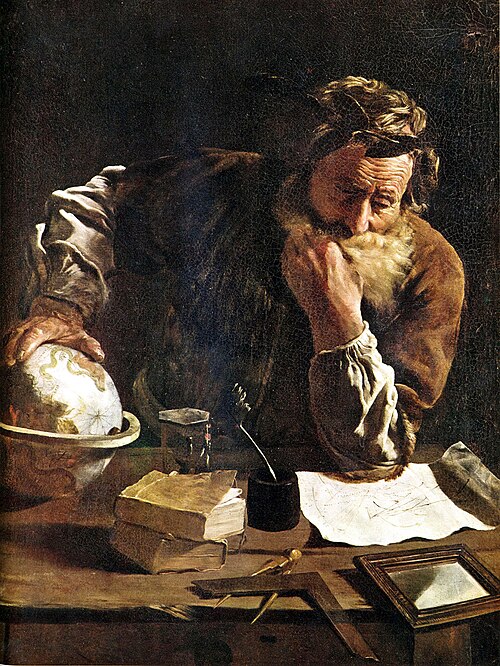
Nicolaus Copernicus (1473–1543) was a Renaissance astronomer and mathematician from the Kingdom of Poland who proposed the heliocentric model, with the Sun rather than the Earth at the centre. His De revolutionibus orbium coelestium, published in the year of his death, launched the Copernican Revolution in science.
- Birthplace
- Toruń (Thorn), Royal Prussia, Kingdom of Poland
- Place of death
- Frombork (Frauenburg)
- Field
- Astronomy, mathematics; also physician, canon lawyer, economist
Early life
Copernicus was born on 19 February 1473 in Toruń, a trading city on the Vistula in Royal Prussia, part of the Kingdom of Poland. His father was a copper merchant; his mother was the sister of Lucas Watzenrode, later Bishop of Warmia. After his father died when he was about ten, his uncle raised him and steered his education and career.
He was multilingual (Latin, German, Polish, with reading knowledge of Greek). Whether he was "Polish or German" was fiercely argued between the two nations in the 19th and 20th centuries; the historian Norman Davies concluded there is good reason to regard him as both.
Studies in Kraków and Italy
From 1491 to 1495 he studied at the University of Kraków, which had a strong tradition in astronomy and mathematics. In 1496 he went to Italy to study canon law in Bologna, where he lodged with and assisted the astronomer Domenico Maria Novara, recording an occultation of Aldebaran by the Moon in 1497.
In 1497, through his uncle, he became a canon of the Warmia cathedral chapter, a post with a lifelong income. He went on to study medicine at Padua and in 1503 took a doctorate in canon law at Ferrara before returning home.
Canon, physician and economist
Back in Warmia, Copernicus served as secretary and personal physician to his uncle the bishop, and handled estates, taxes and diplomacy for the chapter. From 1510 he lived mostly in Frombork on the Vistula Lagoon, observing the sky with simple instruments – the telescope had not yet been invented.
He was also an early monetary theorist. In 1517 he described a quantity theory of money, and in treatises on coinage presented to the Prussian Diet (1519–1522) he argued that debased coin drives good coin out of circulation – the principle later called Gresham's law.
The heliocentric model
Europe then used Ptolemy's geocentric model, with a stationary Earth at the centre and planets moving on complicated nested circles. Around 1510 Copernicus wrote a short manuscript sketch, the Commentariolus (circulating by May 1514), setting out seven assumptions: the Sun is near the centre, the Earth spins daily and orbits the Sun yearly, and the planets' apparent backward motion is an effect of watching from a moving Earth.
Aristarchus of Samos had proposed a Sun-centred cosmos in antiquity, but Copernicus turned the idea into a full mathematical system for computing planetary positions. Because he kept circular orbits and epicycles, his model was not much more accurate than Ptolemy's; its great merit was putting the planets in the right order with correct relative distances.
De revolutionibus
Copernicus worked on the full manuscript for decades but hesitated to publish. In 1539 the young Wittenberg mathematician Georg Joachim Rheticus came to Frombork, stayed about two years as his pupil, wrote the Narratio prima summarising the theory, and persuaded him to print the book.
De revolutionibus orbium coelestium (On the Revolutions of the Heavenly Spheres) was printed in Nuremberg in 1543 with a dedication to Pope Paul III. The theologian Andreas Osiander added an unauthorised, unsigned preface saying the hypotheses need not be true, only useful for calculation. Tradition holds that Copernicus received the first printed copy on his deathbed; he died on 24 May 1543.
Legacy: the Copernican Revolution
At first astronomers used the book as a calculating tool rather than a description of reality. Only with Kepler (elliptical orbits), Galileo (telescopic observation) and Newton (universal gravitation) was heliocentrism established. In 1616, amid the Galileo controversy, the Catholic Church suspended the book "until corrected"; the corrections were issued in 1620.
The phrase "Copernican revolution" (kopernikanische Wende), used by Immanuel Kant in the late 18th century, now means a radical change of perspective, close to a paradigm shift. His grave in Frombork Cathedral was identified in 2005 by a team led by Jerzy Gąssowski (announced in 2008 with DNA comparison), and he was solemnly reburied on 22 May 2010. Nicolaus Copernicus University in Toruń and element 112, copernicium (Cn), bear his name.
Links with Vietnam and Japan
In Vietnam, heliocentrism and Copernicus (often transliterated Cô-péc-ních) appear in the school physics, geography and history curricula on the Renaissance scientific revolution, alongside Galileo and Bruno.
In Japan, heliocentrism arrived through rangaku (Dutch learning) in the Edo period; the Nagasaki interpreter Motoki Ryōei is credited with first introducing it in his 1774 translation Tenchi nikyū yōhō, explaining it more fully in a 1791–1793 translation. Japanese calls it 地動説 (chidōsetsu, "moving-Earth theory") as opposed to 天動説 (tendōsetsu, geocentrism), and the idiom コペルニクス的転回 is in everyday use.
Vocabulary corner
Written ニコラウス・コペルニクス, usually just コペルニクス. Key words: 地動説 (chidōsetsu, heliocentrism), 天動説 (tendōsetsu, geocentrism), 天文学 (tenmongaku, astronomy), 惑星 (wakusei, planet), 公転 (kōten, orbital revolution), 自転 (jiten, rotation), 天球回転論 (Tenkyū kaitenron, On the Revolutions), コペルニクス的転回 (Koperunikus-teki tenkai, Copernican revolution), 悪貨は良貨を駆逐する (akka wa ryōka o kuchiku suru, bad money drives out good).
Vocabulary in this article
- コペルニクスCopernicus (1473-1543)
- 地動説ちどうせつheliocentric theory; Copernican theory;…
- 天動説てんどうせつPtolemaic theory; geocentric model; geo…
- 天文学てんもんがくastronomy
- 惑星わくせいplanet
- 公転こうてんrevolution (of a celestial body around …
- 自転じてんrotation (on an axis)
- 天球回転論
- コペルニクス的転回コペルニクスてきてんかいCopernican Revolution
- 悪貨は良貨を駆逐するあっかはりょうかをくちくするwhen there is a legal tender currency, …