
Modern era · World history
American Revolution アメリカ独立革命
あめりかどくりつかくめい
The American Revolution (1775–1783) was the struggle of Britain's 13 North American colonies for independence, producing the 1776 Declaration of Independence and the 1787 US Constitution, both influential worldwide.
- Key documents
- Declaration of Independence (4 July 1776), Constitution (1787)
- Key figures
- George Washington, Thomas Jefferson, Benjamin Franklin
- Ended by
- Treaty of Paris, 1783
"No taxation without representation"
After war with France, Britain was in debt and imposed new taxes on the colonies, such as the Stamp Act (1765). Colonists objected because they had no representatives in Parliament, under the slogan "no taxation without representation".
In 1773, protesting a tea tax, colonists in Boston dumped hundreds of chests of tea into the harbor, the "Boston Tea Party". Tensions escalated into armed conflict in 1775.
Declaration and war
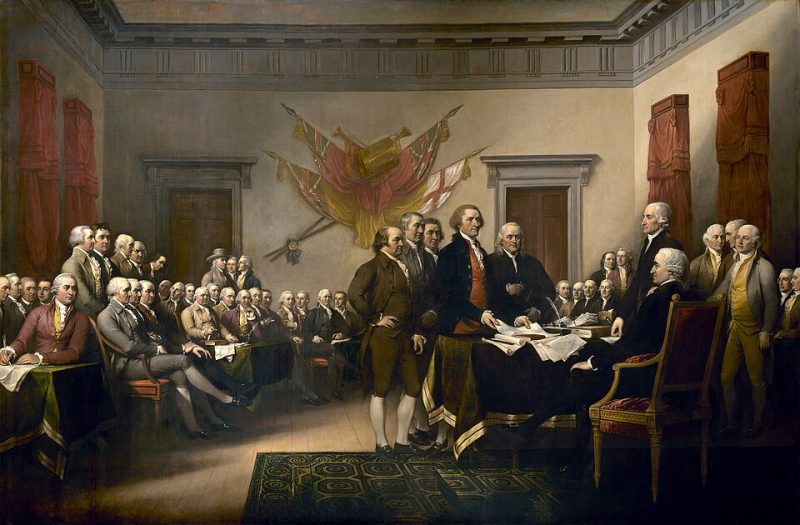
On 4 July 1776 the Continental Congress adopted the Declaration of Independence, drafted mainly by Thomas Jefferson, asserting that all men are created equal with rights to life, liberty and the pursuit of happiness, and that government rests on the consent of the governed.
Colonial forces led by George Washington received help from France and Spain. After Yorktown (1781), Britain recognized US independence in the Treaty of Paris in 1783.
Constitution and influence
The 1787 US Constitution created a federal state based on separation of powers and a presidential system; it is among the oldest written constitutions still in force. The Bill of Rights (first ten amendments) was added in 1791.
Yet these rights did not at first apply to everyone: slavery lasted until 1865, and women and Native Americans could not vote. The American Revolution inspired the French Revolution and independence movements in Latin America.
Japanese – English terms
独立宣言 (どくりつせんげん): Declaration of Independence; 植民地 (しょくみんち): colony; 合衆国憲法 (がっしゅうこくけんぽう): US Constitution; 連邦制 (れんぽうせい): federalism; 三権分立 (さんけんぶんりつ): separation of powers; 権利章典 (けんりしょうてん): Bill of Rights.