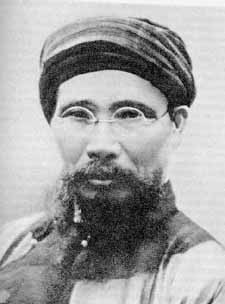
Linked to Vietnam · Famous Japanese people
Araki Sōtarō 荒木宗太郎
あらき そうたろう
Araki Sōtarō (d. 1636) was a red-seal-ship merchant of Nagasaki in the early Edo period who traded repeatedly with Cochinchina and won the trust of the Nguyễn lord Nguyễn Phúc Nguyên. According to tradition he married a woman of the Nguyễn house – Princess Ngọc Hoa to the Vietnamese, "Anio-san" to the people of Nagasaki – and brought her to Nagasaki. Their story is a symbol of Vietnam–Japan ties, re-enacted at the Nagasaki Kunchi festival and in Hội An.
- Origin
- Higo Province (now Kumamoto), of samurai stock; moved to Nagasaki around 1588
- Other names
- Araki Kazukiyo; also called Sōemon
- Occupation
- Red-seal-ship merchant
Origins
Japanese records say Araki Sōtarō came from a samurai family in Higo Province (now Kumamoto Prefecture); his personal name was Kazukiyo and his common name Sōemon. His birth year is unrecorded. Around 1588, late in the Azuchi–Momoyama period, he moved to Nagasaki, then Japan's busiest port, frequented by Portuguese ships and Chinese junks.
In Nagasaki he gave up samurai status to become a merchant, settling in Motoshikkui-machi, the ward that still preserves his family's memory. Many samurai left masterless by the civil wars turned to maritime trade in this era.
Red-seal ships and Cochinchina
From the late 16th to early 17th centuries Japanese rulers issued vermilion-sealed licences (shuinjō) to ships trading with Southeast Asia; these were the red-seal ships. Araki is said to have received a licence under Toyotomi Hideyoshi and to have continued trading under the Tokugawa shogunate.
He is recorded as visiting Ayutthaya in Siam in 1606 and the Nguyễn domain of Quảng Nam in 1610, and from 1619 sailing several times between Japan and Kōchi (交趾, the Japanese name for Cochinchina). The main port was Hội An, which had a Japanese quarter of several hundred people; Japanese ships brought silver, copper and lacquerware and returned with silk, sugar, aloeswood and deerskins.
Lord Nguyễn Phúc Nguyên (r. 1613–1635), locked in rivalry with the Trịnh in the north, needed arms and allies and valued Japanese traders highly. Japanese records say he favoured Araki; some accounts claim he granted him the Nguyễn surname and a title.
Marriage to "Anio-san"
Tradition holds that Araki married a woman of the Nguyễn house (usually dated 1619) and brought her to Nagasaki. In Japan she took the name Araki Wakaku, and Nagasaki people called her "Anio-san"; the origin of the nickname is unclear, one theory tracing it to the Vietnamese way she addressed her husband. Vietnamese tradition calls her Princess Ngọc Hoa, daughter of Lord Nguyễn Phúc Nguyên, while some Japanese sources describe her as an adopted daughter or ward.
She lived in Nagasaki for the rest of her life and had a daughter, Yasu. Around 1632–1633, as the shogunate restricted foreign travel, the family settled permanently in Japan. Araki died on 4 December 1636 and Anio in 1645; they lie together in the Araki family plot behind Daion-ji temple in Nagasaki.
Descendants include the Meiji-era educator Araki Shūdō, and Japanese sources link Araki Kinuko, wife of the statesman Itagaki Taisuke, to the family. A mirror said to have been brought by Anio from Vietnam is often mentioned in accounts of the story.
Legend and evidence
Araki's voyages appear in red-seal registers and Nagasaki documents and are fairly reliable. By contrast, his wife's exact identity, the wedding date and whether she was the Nguyễn lord's own daughter rest mainly on family tradition and later writings; Nguyễn court chronicles do not clearly record a princess named Ngọc Hoa marrying a Japanese.
Scholars therefore usually present the story as a tradition with a historical basis rather than a fact verified in every detail; some sources even give Araki's death as 1635. Marriages between Japanese merchants and local women in Hội An were, however, a real phenomenon attested by European and Japanese sources.
Nagasaki Kunchi festival
At the Nagasaki Kunchi festival (7–9 October at Suwa Shrine), each ward performs in rotation roughly once every seven years. Motoshikkui-machi presents the Goshuinsen (red-seal ship): a large trading ship pulled and spun around the square, re-enacting Araki bringing his bride home, complete with Anio's wedding procession.
Girls in the festival are sometimes called "Anio-hime" after her. When Motoshikkui-machi's turn comes, the performance draws particular attention from visitors and Vietnamese media.
Connection with Vietnam
In Vietnam the Araki–Ngọc Hoa story is seen as one of the earliest landmarks of Vietnam–Japan friendship. At the Hội An–Japan Cultural Exchange festival the old town has repeatedly re-enacted their wedding with a boat procession on the Hoài River. The Japanese Covered Bridge and traces of the Japanese quarter recall the merchant community of Araki's day.
In 2023, for the 50th anniversary of diplomatic relations, the opera Princess Anio, produced jointly by Vietnamese and Japanese artists, was staged in Hanoi and Tokyo. The story has also been retold in manga, children's books and exchanges between Nagasaki and Quảng Nam.
Japanese corner
Name: 荒木宗太郎 (Araki Sōtarō). 朱印船 (shuinsen, red-seal ship): 朱 is vermilion and 印 a seal; 朱印状 (shuinjō) is the licence itself.
Vocabulary: 交趾 (Kōchi, Cochinchina), 鎖国 (sakoku, national isolation), 貿易 (bōeki, trade), 日本町 (nihonmachi, Japantown), 長崎くんち (Nagasaki Kunchi), 奉納踊 (hōnō odori, dedicatory dance), 輿入れ (koshiire, bridal procession).
Vocabulary in this article
- 荒木宗太郎
- 朱印船しゅいんせんred seal ship; shogunate-licensed tradi…
- 朱印状しゅいんじょうlicense with a red seal (licence); shog…
- 交趾こうちJiaozhi (a region ruled by various Chin…
- 会安
- 鎖国さこくnational isolation; closing the country…
- 貿易ぼうえき(foreign) trade; (international) commer…
- 日本町にほんまちJapantown (esp. historical Japantowns i…
- 長崎くんち
- 奉納踊
- アニオー姫
- 大音寺