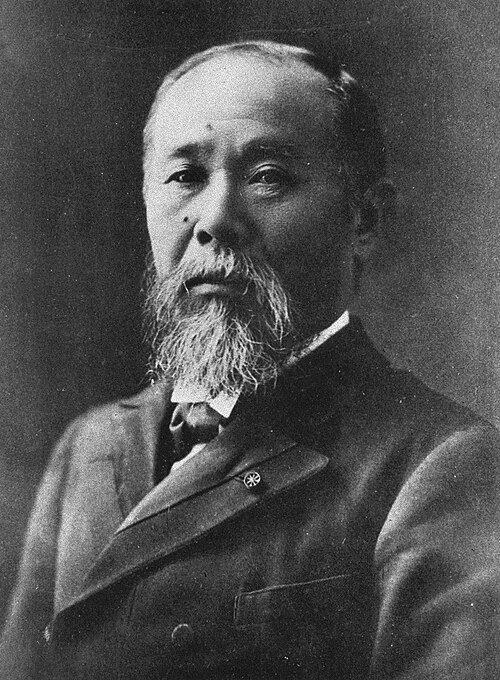
Linked to Vietnam · Famous Japanese people
Phan Boi Chau 潘佩珠
ファン・ボイ・チャウ
Phan Bội Châu (1867–1940), pen name Sào Nam, was a leading Vietnamese patriot and writer of the early 20th century. He founded the Duy Tân Hội, launched the Đông Du ("Go East") movement that sent about 200 young Vietnamese to study in Japan to prepare for independence, and later founded the Việt Nam Quang Phục Hội. He is the key figure in modern Vietnam–Japan relations.
- Birth name, pen names
- Born Phan Văn San; pen names Sào Nam, Hải Thụ and others
- Hometown
- Nam Đàn, Nghệ An Province, Vietnam
- Field
- National liberation movement; literature, history
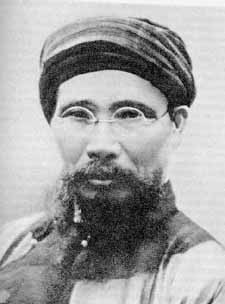
Family and early years
Born Phan Văn San in 1867 (English sources often give 26 December) in Nam Đàn, Nghệ An, to a poor scholar's family, he was a brilliant student. Growing up as France completed its conquest, he was drawn early to resistance.
In 1900 he came first in the regional examination at Nghệ An, but instead of taking office he used his prestige to build a network of like-minded scholars.
The Duy Tân Hội and the journey to Japan (1904–1905)
In 1904 he and associates such as Nguyễn Hàm founded the Duy Tân Hội in Quảng Nam, with Prince Cường Để, a descendant of Emperor Gia Long's eldest son, as its figurehead.
Japan's victory in the Russo-Japanese War electrified Asia, and the society sought Japanese weapons. In early 1905 Phan secretly travelled via China to Japan.
In Yokohama he met the Chinese reformer Liang Qichao, who introduced him to Japanese politicians such as Inukai Tsuyoshi and Ōkuma Shigenobu. They said open military aid was impossible and urged him first to train capable young people. At Liang's urging he wrote History of the Loss of Vietnam (1905), which Liang published.
The Đông Du movement (1905–1909)
Through appeals such as Letter Written in Blood from Abroad, he urged young Vietnamese to study in Japan and compatriots to fund them; Cường Để himself came to Japan in 1906. Support came from all three regions, especially the south.
By about 1908 some 200 Vietnamese students were in Japan, many at the Tōa Dōbunkai's Tokyo Dōbun Shoin and some at military-oriented schools.
Under the 1907 Franco-Japanese Agreement, Japan at France's request dispersed the students in 1908 and expelled the leaders; Phan left in 1909. Returning students were arrested and supporters at home persecuted.
At his lowest point a Japanese physician, Asaba Sakitarō, gave him a large sum of money with no conditions — now the best-known story of Vietnam–Japan friendship.
The Restoration League and exile (1909–1925)
Leaving Japan, he worked from China and Siam. Inspired by the 1911 Chinese revolution, he founded the Việt Nam Quang Phục Hội in Guangzhou in 1912, aiming for a republic rather than a monarchy.
The league's 1913 assassinations and bombings failed and were suppressed. At French request the Guangdong authorities jailed him from late 1913 to 1917; in prison he wrote Prison Notes (1914).
In 1917, learning that Asaba had died, he secretly returned to Japan and in 1918 erected a memorial stele at Jōrin-ji temple in Asaba village (now Fukuroi, Shizuoka), with an inscription he composed in classical Chinese.
Arrest and "the old man of Bến Ngự" (1925–1940)
In June 1925 French agents seized him in Shanghai and brought him to Hanoi, where he was sentenced to life with hard labour. Protests across the country, especially among students, led Governor-General Alexandre Varenne to pardon him late in 1925, but he was kept under surveillance at Bến Ngự in Huế.
Known as "the old man of Bến Ngự", he spent his last fifteen years writing, teaching young visitors and even studying socialist ideas. He died in Huế on 29 October 1940.
Ideas, writings and assessment
His writings — History of the Loss of Vietnam, Letter Written in Blood from Abroad, his autobiography and others — circulated secretly and inspired generations. He wrote in classical Chinese, Nôm and later the Vietnamese alphabet.
Assessments differ. His contemporary Phan Châu Trinh opposed violence and reliance on foreigners, arguing for education first. Nguyễn Ái Quốc (Hồ Chí Minh) later likened relying on Japan to "driving the tiger out the front door while welcoming the leopard in the back". Yet he is widely honoured as a model patriot who moved the movement from monarchism towards democracy.
Many streets and schools in Vietnam bear his name, with memorial sites in Nam Đàn and Huế.
Vietnam–Japan ties today
Though it failed, the Đông Du movement is seen as the first chapter of modern people-to-people exchange between the two countries and a forerunner of today's many Vietnamese students in Japan; the name "Đông Du" is used for scholarship and exchange programmes.
The stele at Jōrin-ji in Fukuroi is still visited by Vietnamese officials and students, and the city maintains exchanges with Vietnam. In 2017 Emperor Akihito and Empress Michiko visited Huế and met Phan's descendants. His story also featured in the 2013 Vietnam–Japan TV drama The Partner.
Japanese corner
In Japanese his name is written ファン・ボイ・チャウ with the characters 潘佩珠. The movement is 東遊運動 (tōyū undō), often called ドンズー運動; in English, the "Go East movement".
Vocabulary: 留学生 (overseas student), 独立運動 (independence movement), 記念碑 (memorial), 日仏協約 (Franco-Japanese Agreement), 日露戦争 (Russo-Japanese War), 恩人 (benefactor), 亡命 (exile).