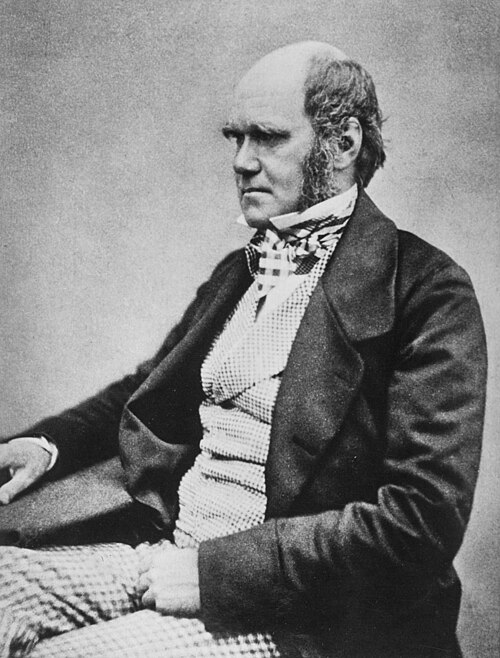
Science · Famous people of the world
Alexander Fleming フレミング
ふれみんぐ
Alexander Fleming (1881 – 1955) was a Scottish bacteriologist who discovered penicillin in 1928, the first widely used antibiotic, opening the antibiotic era in medicine. He also discovered the enzyme lysozyme. In 1945 he shared the Nobel Prize in Physiology or Medicine with Howard Florey and Ernst Chain, who turned penicillin into a usable drug.
- Birthplace
- Lochfield farm near Darvel, Ayrshire, Scotland
- Nationality
- British (Scottish)
- Institution
- St Mary's Hospital Medical School, London
Early life and route into medicine
Alexander Fleming was born on 6 August 1881 at Lochfield farm near Darvel, Ayrshire, Scotland, the seventh of eight surviving children of a farming family. His father died when he was seven. A country childhood sharpened his habit of close observation, which he later considered vital to science.
At thirteen he moved to London to live with a stepbrother who was a doctor. He attended the Royal Polytechnic Institution (now the University of Westminster) and then worked for about four years as a clerk in a shipping office. A small legacy from an uncle, and his brother's advice, led him to study medicine.
In 1901 he won a scholarship to St Mary's Hospital Medical School in Paddington, London, his professional home for the rest of his life. A well-known anecdote says he stayed at St Mary's partly because its rifle club wanted a good shot. He qualified with distinction in 1906 and joined the Inoculation Department under Sir Almroth Wright, a pioneer of vaccine therapy.
World War I and lysozyme
During World War I Fleming served in the Royal Army Medical Corps (promoted captain in 1917) at a laboratory in Boulogne, France. Studying wound infections, he found that the strong antiseptics then in use often harmed tissue and white blood cells more than they killed bacteria deep in wounds. Seeing soldiers die of infection spurred him to look for safer antibacterial agents.
In 1921, while studying his own nasal mucus during a cold, he found a substance in the body that dissolved certain bacteria; he named it lysozyme and published in 1922. Present in tears, saliva and egg white, lysozyme acts mainly on harmless bacteria, but the work trained him to look for natural antibacterial substances.
The discovery of penicillin (1928)
In September 1928 Fleming returned from a holiday of about two weeks and examined staphylococcus culture plates left on his bench. One was contaminated with a mould, and around it the bacterial colonies had been destroyed. Alternating cool and warm weather during his absence had let both mould and bacteria grow — a rare coincidence.
He cultured the mould, identified it as a Penicillium (later named Penicillium notatum, now usually called Penicillium rubens), and called its antibacterial substance "penicillin". He showed that it acted on many dangerous pathogens such as staphylococci, streptococci and pneumococci, and was not toxic to white blood cells.
He published in June 1929 in the British Journal of Experimental Pathology, but the paper attracted little attention in the 1930s. Penicillin was hard to extract and unstable, his group lacked chemists, and Fleming himself for years saw it mainly as a topical antiseptic or a laboratory tool for isolating bacteria.
From discovery to life-saving drug
The breakthrough came at Oxford. In 1939 – 1940 a team led by the Australian pathologist Howard Florey and the German-born biochemist Ernst Chain, with Norman Heatley, found ways to purify penicillin and showed in mice that it cured lethal infections. In 1941 they treated their first human patient.
During World War II Britain and the United States collaborated to mass-produce penicillin. By the Normandy landings in 1944 there was enough to treat wounded Allied soldiers. Wartime press hailed Fleming as the hero, sometimes overshadowing the Oxford team.
Fleming was knighted in 1944. In 1945 he, Florey and Chain shared the Nobel Prize in Physiology or Medicine "for the discovery of penicillin and its curative effect in various infectious diseases".
Warning on resistance and later life
In his 1945 Nobel lecture Fleming warned that using too little penicillin, or using it carelessly, could make bacteria resistant. The warning is often quoted today as the world faces antibiotic resistance.
After the war he travelled widely and received many honorary degrees and awards, and headed the Wright-Fleming Institute at St Mary's. His first wife, Sarah McElroy, died in 1949; in 1953 he married the Greek scientist Amalia Koutsouri-Vourekas, a colleague at St Mary's.
He died suddenly of a heart attack at his London home on 11 March 1955, aged 73, and was buried in St Paul's Cathedral, an honour given to very few.
Assessment and legacy
Penicillin and the antibiotics that followed have saved hundreds of millions of lives, turning once-fatal diseases such as pneumonia, sepsis and syphilis into curable conditions. Fleming is regularly listed among the most influential people of the twentieth century.
Historians of medicine stress that penicillin was a collective achievement: Fleming discovered and described it, while Florey, Chain, Heatley and American manufacturers made it a drug. Fleming himself modestly said that he had not invented penicillin — nature had, and he had found it by accident.
Connections with Japan and Vietnam
In Japan, during World War II, scientists developed their own penicillin from foreign medical literature, calling it 碧素 (hekiso, "blue-green substance"); after the war penicillin became a mainstay antibiotic. Fleming's chance discovery is a standard example of serendipity (セレンディピティ) in Japanese science books.
In Vietnam the Fleming story appears in biology textbooks and penicillin is among the most widely used antibiotics; his warning about resistance is echoed in Vietnamese health campaigns against antibiotic misuse.
Japanese corner
His name is written フレミング, in full アレクサンダー・フレミング.
Key words: 抗生物質 (antibiotic), ペニシリン (penicillin), 青カビ (blue mould), 細菌 (bacteria), 細菌学者 (bacteriologist), 耐性菌 (resistant bacteria), 感染症 (infectious disease), 偶然の発見 (chance discovery).