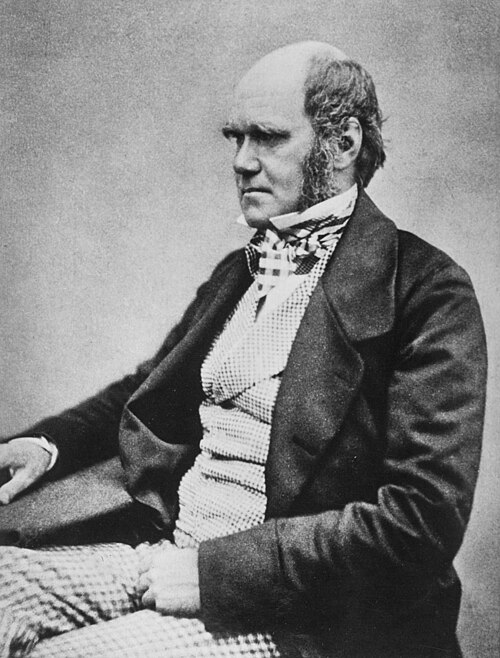
Science · Famous people of the world
Louis Pasteur パスツール
ぱすつーる
Louis Pasteur (1822–1895) was a French chemist and microbiologist and a founder of the germ theory of disease. He devised pasteurization, disproved spontaneous generation and developed vaccines against anthrax and rabies. The worldwide network of Pasteur Institutes, including several in Vietnam, bears his name.
- Birthplace
- Dole, Jura, France
- Place of death
- Marnes-la-Coquette, near Paris
- Nationality
- French
Early life and education
Louis Pasteur was born on 27 December 1822 in Dole, eastern France, the son of a tanner who had served as a soldier under Napoleon. The family moved to Arbois, where he grew up. As a boy he was an average pupil, more interested in drawing portraits than in study.
He entered the École normale supérieure in Paris in 1843, studied chemistry and physics and earned his doctorate in 1847. While teaching in Strasbourg he married Marie Laurent (1849). They had five children, but three daughters died young of typhoid and other illnesses, losses that many biographers see as driving his work on infectious disease.
From crystals to fermentation
Pasteur's first major work (1848), on crystals of tartaric acid, showed that some molecules exist in two mirror-image forms that rotate polarised light in opposite directions. This was the first demonstration of molecular chirality and laid the foundation of stereochemistry.
In 1854 he became dean of sciences at the University of Lille, a region of distilleries and beet-sugar factories. Studying spoiled alcohol, he showed that fermentation is the work of living microorganisms: yeast makes alcohol, while other bacteria sour it. This contradicted the prevailing view that fermentation was a purely chemical reaction.
He then proposed heating wine, and later milk, briefly to about 50–60°C to kill harmful microbes without ruining flavour. Patented in 1865, the method became known as pasteurization and is still widely used in the food industry.
Spontaneous generation and germ theory
At the time many believed in spontaneous generation, the idea that microbes arise on their own from organic matter. Pasteur used 'swan-neck' flasks: broth boiled in a flask whose curved neck let air in but trapped dust in the bend stayed sterile, but once the neck was broken microbes soon grew. The experiment showed that microbes come from outside, and won him the Alhumbert Prize in 1862.
From 1865 to 1870 he was asked to save the silk industry of southern France from pébrine disease; his method of selecting healthy silkworm eggs under the microscope helped it recover. A stroke in 1868 left him partly paralysed on one side, but he kept working.
Together with Robert Koch in Germany, Pasteur helped establish germ theory: that many diseases are caused by specific microorganisms. The British surgeon Joseph Lister built on Pasteur's work to develop antiseptic surgery, sharply reducing post-operative deaths.
Vaccines: from anthrax to rabies
Around 1879, while studying chicken cholera, Pasteur's team found that aged, weakened bacteria could confer immunity instead of disease. He gave such preparations the general name 'vaccine' in honour of Edward Jenner, who had used cowpox (vacca, cow) against smallpox.
In May 1881, at the farm of Pouilly-le-Fort, he staged a public trial: sheep vaccinated against anthrax survived, while unvaccinated ones died after being infected. The resounding success made him a national hero.
On 6 July 1885 Pasteur had an experimental rabies vaccine given to nine-year-old Joseph Meister, who had been badly bitten by a rabid dog. Meister survived. Further successes brought donations from around the world to build the Pasteur Institute in Paris, inaugurated in 1888; he directed it until his death.
Last years and resting place
In 1892 Pasteur's 70th birthday was celebrated with great ceremony at the Sorbonne, attended by scientists from around the world. His health gradually declined after several strokes.
He died on 28 September 1895 at Marnes-la-Coquette near Paris and received a state funeral. His body was first placed in Notre-Dame de Paris and later moved to a mosaic-decorated crypt in the Pasteur Institute. According to a widely told story, Joseph Meister later worked as caretaker at the institute.
Assessment and debate
Pasteur is counted among those who have saved the most lives in history, thanks to food pasteurization, vaccines and the principles of hygiene and asepsis that grew out of his work.
However, after his private laboratory notebooks were made public, historian Gerald Geison (The Private Science of Louis Pasteur, 1995) showed that Pasteur's public accounts did not always match what he had done: the anthrax vaccine at Pouilly-le-Fort, for example, was prepared with a chemical method close to that of Henry Toussaint rather than Pasteur's own oxidation method. Treating Meister when Pasteur was not a physician and the vaccine had not been fully tested on humans also raises ethical questions. His bitter rivalry with Robert Koch, coloured by nationalism after the Franco-Prussian War, is part of the story too.
Connections with Vietnam and Japan
Pasteur has a special link with Vietnam through his students. In 1891 Albert Calmette founded the Pasteur Institute of Saigon, the first outside France and today the Pasteur Institute of Ho Chi Minh City. Alexandre Yersin, another Pasteur pupil, set up a laboratory in Nha Trang (later the Pasteur Institute of Nha Trang) and spent the rest of his life in Vietnam. There were also institutes in Hanoi and Da Lat, since converted to other uses.
Pasteur's name is still borne by a major street in central Ho Chi Minh City and by streets in other cities, one of the few French names kept after 1975, a sign of respect for his contribution to medicine. In Japan, the low-temperature pasteurization associated with him is familiar from milk cartons labelled 'pasteurized milk' (パスチャライズド牛乳).
Japanese corner
Japanese name: ルイ・パスツール, usually パスツール.
Vocabulary: 微生物 (biseibutsu, microorganism), 細菌 (saikin, bacteria), 発酵 (hakkō, fermentation), 低温殺菌 (teion sakkin, pasteurization), ワクチン (wakuchin, vaccine), 狂犬病 (kyōkenbyō, rabies), 炭疽 (tanso, anthrax), 免疫 (men'eki, immunity), 自然発生説 (shizen hassei setsu, spontaneous generation).
観察の領域において、偶然は準備のできた心にのみ味方する。
— Louis Pasteur
Vocabulary in this article
- パスツール
- 微生物びせいぶつmicrobe; germ
- 細菌さいきんbacterium; bacteria; germ
- 発酵はっこうfermentation; zymosis
- 低温殺菌ていおんさっきんlow-temperature pasteurization
- ワクチンvaccine
- 狂犬病きょうけんびょうrabies
- 炭疽たんそanthrax
- 免疫めんえきimmunity; immunization; immunisation
- 自然発生説しぜんはっせいせつtheory of spontaneous generation
- パスツール研究所パスツールけんきゅうじょPasteur Institute; Institut Pasteur