
Dinosaurs · The world of dinosaurs
Iguanodon イグアノドン
いぐあのどん
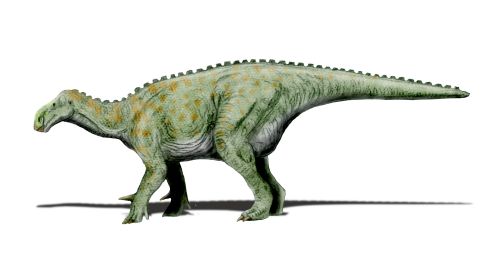
Iguanodon was a plant-eater with a spiky thumb that lived in Early Cretaceous Europe. It was one of the very first dinosaurs to be scientifically named.
- Length
- about 10 m
- Estimated weight
- about 3–4 tonnes
- Diet
- Herbivore
Discovery and name
In 1825 English doctor Gideon Mantell named Iguanodon because its fossil teeth looked like much larger versions of an iguana's. In 1878 miners at Bernissart, Belgium, found dozens of skeletons in a coal mine, finally revealing its true shape.
Body and features
Mantell first thought the thumb spike was a horn on its nose. The spike may have been used for defence or breaking branches, and its flexible little finger could grasp food.
How it lived
It could walk on two or four legs and probably lived in herds, chewing food with tightly packed teeth, an important advance among plant-eating dinosaurs.
Vocabulary corner
Japanese: 鳥脚類 (ornithopod), 親指 (thumb), とげ (spike), 炭鉱 (coal mine), 命名 (naming).
Vietnamese: khủng long chân chim (ornithopod), ngón cái (thumb), gai (spike), mỏ than (coal mine), đặt tên (naming).