
Eras & science · The world of dinosaurs
Jurassic ジュラ紀
じゅらき
The Jurassic (about 201–145 million years ago) was when giant dinosaurs ruled the land. The first birds, such as Archaeopteryx, appeared towards its end.
- Name means
- after the Jura Mountains on the France–Switzerland border
- Typical life
- Brachiosaurus, Diplodocus, Stegosaurus, Allosaurus, Archaeopteryx
- Key events
- Pangaea broke apart; first birds appeared
Overview
The period is named after the Jura Mountains, rich in limestone of this age. The film Jurassic Park (1993) made the name famous, although many of its stars, such as T. rex and Velociraptor, actually lived in the Cretaceous.
Earth at the time
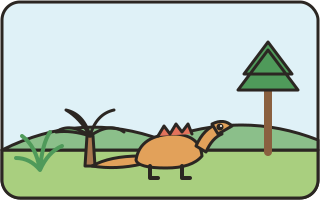
Pangaea began splitting into Laurasia in the north and Gondwana in the south, and the Atlantic Ocean started to open. The climate grew warmer and wetter, with lush forests of conifers and ferns that fed giant sauropods.
Life in the Jurassic
On land lived sauropods such as Brachiosaurus and Diplodocus, predators like Allosaurus and plated Stegosaurus. Ichthyosaurs and plesiosaurs swam the seas and pterosaurs flew overhead. Mammals were still small and secretive.
Vocabulary corner
Japanese: ジュラ紀 (Jurassic), 大陸移動 (continental drift), 竜脚類 (sauropod), 針葉樹 (conifer), シダ (fern).
Vietnamese: kỷ Jura (Jurassic), trôi dạt lục địa (continental drift), khủng long cổ dài (sauropod), cây lá kim (conifer), dương xỉ (fern).