
The human body · Biology
Immune system 免疫
めんえき
The immune system is the body's defense force, recognizing and destroying bacteria, viruses and abnormal cells.
- Two branches
- Innate and adaptive immunity
- Key cells
- White blood cells (macrophages, B and T cells)
First lines of defense
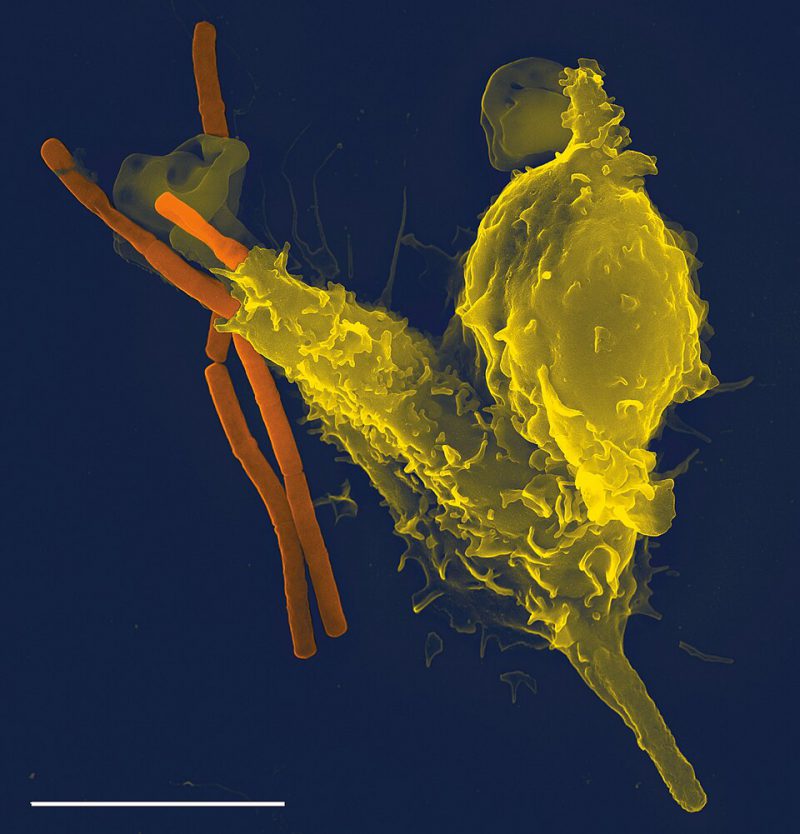
Skin, mucous membranes, tears and stomach acid keep pathogens out. If they get in, phagocytes such as macrophages engulf them; this innate immunity responds quickly to any invader. Fever and redness are signs of this process.
Adaptive immunity
B cells make antibodies that fit a pathogen's antigen like a key in a lock. T cells kill infected cells and coordinate the response. After recovery, memory cells allow a faster response next time.
How vaccines work
A vaccine introduces a safe antigen (weakened pathogen, protein piece or mRNA) so the immune system can rehearse and build memory without the real disease. This article explains the mechanism only and is not medical advice.
Japanese–English vocabulary
Terms used in this article: 免疫 (めんえき) – immunity; 抗原 (こうげん) – antigen; 抗体 (こうたい) – antibody; 白血球 (はっけっきゅう) – white blood cell; 自然免疫 (しぜんめんえき) – innate immunity; ワクチン – vaccine.