
The human body · Biology
Nervous system 神経系
しんけいけい
The nervous system is the network that senses the environment, processes information and controls body activities, from heartbeat to thought.
- Main parts
- Brain, spinal cord, nerves
- Basic unit
- Neuron
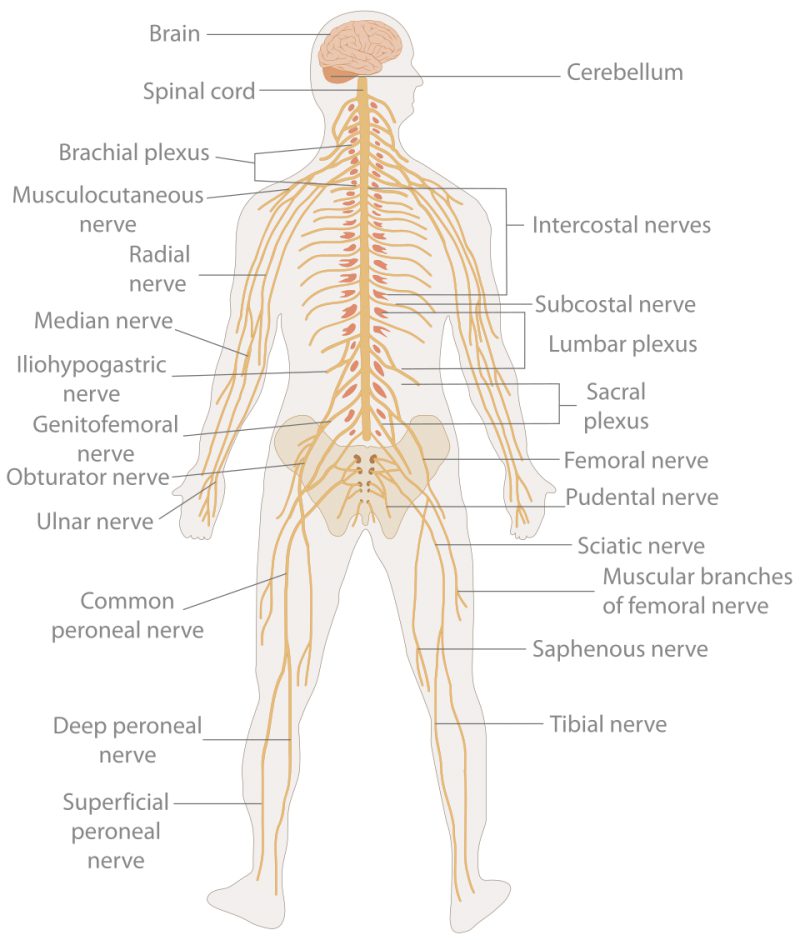
Central and peripheral
The central nervous system, the brain and spinal cord, is the control center. The peripheral nervous system is the nerves linking it to organs, like wiring throughout a building. The autonomic system (sympathetic and parasympathetic) automatically controls the heart, gut and sweat glands.
Neurons and synapses
Neurons send electrical signals along their axons. At the end, the signal crosses the synaptic gap via neurotransmitters such as acetylcholine or dopamine to excite the next neuron. The human brain has about 86 billion neurons.
Reflexes
When you touch a hot pot, you pull back before you even feel pain. That is a reflex: the signal goes from the skin to the spinal cord and straight back to the muscle without waiting for the brain, protecting you as fast as possible.
Japanese–English vocabulary
Terms used in this article: 神経系 (しんけいけい) – nervous system; 中枢神経系 (ちゅうすうしんけいけい) – central nervous system; 自律神経 (じりつしんけい) – autonomic nerves; ニューロン – neuron; シナプス – synapse; 反射 (はんしゃ) – reflex.