
Ecology & evolution · Biology
Ecosystem 生態系
せいたいけい
An ecosystem is a community of organisms together with its non-living surroundings, linked by energy flow and nutrient cycles. A pond, a forest or a whole ocean are all ecosystems.
- Term coined by
- Arthur Tansley, 1935
- Components
- Biotic and abiotic components
Components
Abiotic components include light, temperature, water, soil and air. Biotic components are producers, consumers and decomposers. In a pond, for example, algae and water plants are producers, fish and shrimp are consumers, and bacteria in the mud are decomposers.
Energy flows, matter cycles
Solar energy enters the ecosystem through photosynthesis and is gradually lost as heat, so it must be constantly replenished. Elements such as carbon and nitrogen, however, are reused through biogeochemical cycles: plants absorb them, animals eat them and decomposers return them to the environment.
Types of ecosystems
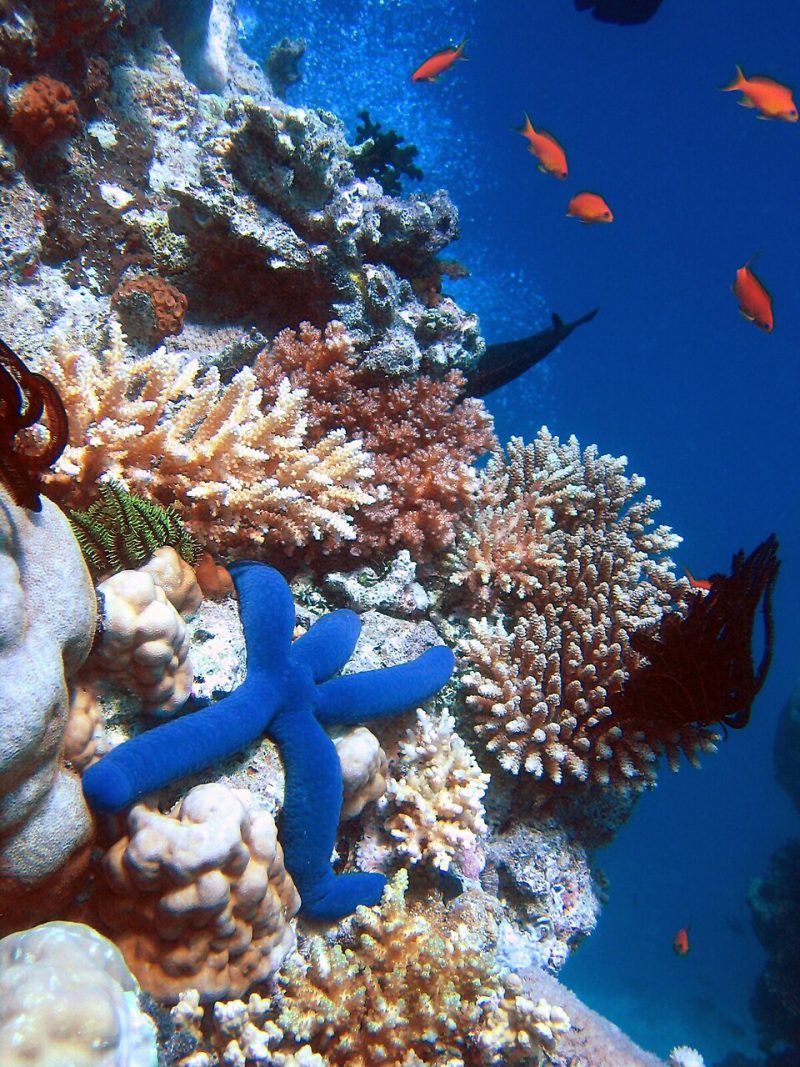
There are natural ecosystems such as tropical rainforests, coral reefs and mangroves, and human-made ones such as rice paddies, orchards and fish ponds. Mangroves along Vietnam's coast are breeding grounds for many fish and shrimp and also help shield the shore from waves.
Japanese–English vocabulary
Terms used in this article: 生態系 (せいたいけい) – ecosystem; 物質循環 (ぶっしつじゅんかん) – nutrient cycle; 生物群集 (せいぶつぐんしゅう) – community; 非生物的環境 (ひせいぶつてきかんきょう) – abiotic environment; マングローブ – mangrove; サンゴ礁 (さんごしょう) – coral reef.