
Applied mathematics · Mathematics
Cryptography 暗号
あんごう
Cryptography is the science of keeping information secret using mathematics. From the Roman Caesar cipher to RSA protecting today's internet, it relies on problems that are easy one way and hard to reverse.
- Mathematical basis
- Prime numbers, modular arithmetic
- Milestone
- RSA (1977)
- Applications
- HTTPS, banking, messaging
Classical ciphers
The Caesar cipher shifts each letter three places: A becomes D, B becomes E. It is easy to break, since there are only 25 shifts, or by counting the most common letters (frequency analysis).
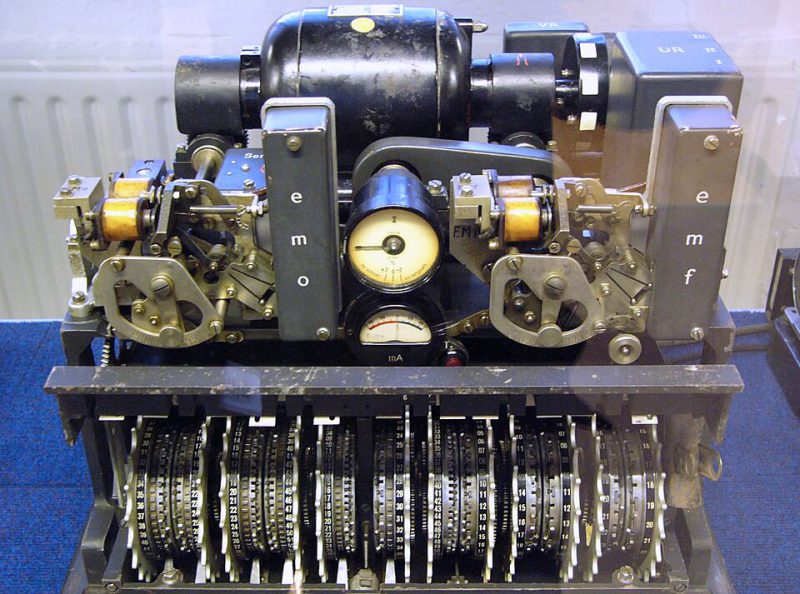
The Enigma machine
In World War II Germany used the Enigma machine with an enormous number of settings. Polish mathematicians and Alan Turing's team in Britain found ways to break it, contributing to the birth of computers.
Public-key cryptography
RSA uses a public key that anyone can use to lock a message, while only the private-key holder can unlock it. Its security rests on how hard it is to factor a huge number into two primes, like a padlock anyone can snap shut but only the owner can open.
Everyday life
The padlock icon in your browser (HTTPS), card payments, e-wallets and end-to-end encrypted messaging all use cryptography. Future quantum computers could threaten RSA, so post-quantum cryptography standards are being developed.
Japanese – English terms
Key terms (Japanese – English – Vietnamese): 暗号 (あんごう) – cipher, code – mật mã; 暗号化 (あんごうか) – encryption – mã hóa; 復号 (ふくごう) – decryption – giải mã; 公開鍵 (こうかいかぎ) – public key – khóa công khai; 秘密鍵 (ひみつかぎ) – private key – khóa bí mật; 素数 (そすう) – prime number – số nguyên tố; 解読 (かいどく) – code-breaking – phá mã.