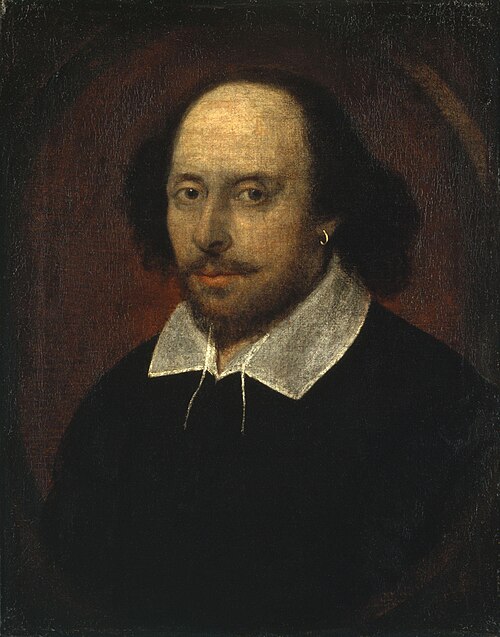
Arts & culture · 世界名人
Johann Sebastian Bach バッハ
ばっは
Johann Sebastian Bach (1685 – 1750) was a German Baroque composer and organist, widely regarded as one of the greatest composers of all time. He left more than a thousand works, from cantatas, the St Matthew Passion and the Mass in B minor to the Well-Tempered Clavier, the Goldberg Variations, the Brandenburg Concertos and the cello suites. Partly forgotten after his death, his music was revived from the nineteenth century and is now a cornerstone of Western musical education.
- Birthplace
- Eisenach, Thuringia, Germany
- Era
- Baroque
- Main posts
- Organist at Arnstadt, Mühlhausen, Weimar; Kapellmeister at Köthen (1717 – 23); Thomaskantor in Leipzig (1723 – 50)
A musical family and an orphaned childhood
Johann Sebastian Bach was born on 21 March 1685 (Old Style) in Eisenach, Thuringia, into a long line of musicians — in that region "Bach" almost meant "musician". His father, Johann Ambrosius Bach, a town and court musician, taught him violin. He studied Latin and Lutheran doctrine at the Eisenach school Martin Luther had once attended.
In 1694 his mother died, and his father followed less than a year later. At about ten Bach went to live with his eldest brother, Johann Christoph, organist at Ohrdruf, who taught him keyboard. A story tells of the boy secretly copying by moonlight a volume of music his brother had forbidden him to touch. In 1700, aged fifteen, he won a choral scholarship to St Michael's School in Lüneburg, where he encountered the North German organ tradition.
Young organist: Arnstadt, Mühlhausen, Weimar
In 1703 Bach briefly served as a court musician in Weimar, and that August became church organist at Arnstadt. In 1705 – 06 he took four weeks' leave to travel some 450 km to Lübeck (reportedly on foot) to hear the great organist Dietrich Buxtehude, but stayed about four months, annoying the church council. In 1707 he moved to Mühlhausen as organist and married his cousin Maria Barbara Bach.
From 1708 to 1717 he was organist and, from 1714, Konzertmeister to the Duke of Weimar. In these years he wrote many great organ works and began composing cantatas regularly. He also studied and arranged Vivaldi's concertos, absorbing the Italian style. In 1717, when Bach demanded release to take a post elsewhere, the angry duke jailed him for nearly a month before letting him go.
Köthen: the instrumental years
From 1717 to 1723 Bach was Kapellmeister to the music-loving Prince Leopold of Anhalt-Köthen. As the court was Calvinist, with little church music, Bach concentrated on instrumental works: the six Brandenburg Concertos (dedicated to the Margrave of Brandenburg in 1721), the suites for unaccompanied cello, the sonatas and partitas for solo violin, and Book I of the Well-Tempered Clavier (1722) — 24 preludes and fugues in every major and minor key.
In 1720, while Bach was travelling with the prince, his wife Maria Barbara died suddenly; by the time he returned she had been buried. They had seven children, four surviving to adulthood, including Wilhelm Friedemann and Carl Philipp Emanuel. On 3 December 1721 he married the soprano Anna Magdalena Wilcke, who bore thirteen more children, six surviving to adulthood. The Notebook for Anna Magdalena Bach is a familiar collection for piano learners.
Leipzig: Thomaskantor (1723 – 1750)
In May 1723 Bach became Thomaskantor — music director of St Thomas Church and Leipzig's main churches and teacher at the Thomasschule. The council chose him only after preferred candidates such as Telemann declined. He held the post for 27 years, until his death, despite frequent disputes with the council over working conditions.
In his first years in Leipzig he composed nearly a cantata a week for Sunday services; in all he wrote over 300 cantatas, about 200 of which survive. He composed the St John Passion (1724) and the St Matthew Passion (1727), vast works for double choir and orchestra. He also directed the Collegium Musicum, a student ensemble playing at Zimmermann's coffee house, for which he wrote the comic Coffee Cantata.
In 1736 he received the title of Court Composer to the King of Poland and Elector of Saxony. In the 1740s he completed Book II of the Well-Tempered Clavier, the Goldberg Variations, the Musical Offering (1747, after visiting Frederick the Great of Prussia), the Mass in B minor (completed 1748 – 49) and the unfinished Art of Fugue.
Final years
In his last years Bach's eyesight failed badly. In early 1750 he underwent two operations by the English oculist John Taylor (who also operated on Handel); they failed and left complications. Bach died in Leipzig on 28 July 1750, aged 65.
He was buried in St John's churchyard; in 1950, on the bicentenary of his death, remains believed to be his were moved into St Thomas Church. After his death the family fell on hard times, and Anna Magdalena died in poverty in 1760.
Style, neglect and revival
Bach was a master of counterpoint — combining several independent melodies at once — above all in the fugue. He synthesised German, Italian and French traditions, joining near-mathematical rigour with emotional depth and religious faith; he often wrote "S.D.G." (Soli Deo Gloria, "to God alone the glory") at the end of his scores. The Well-Tempered Clavier helped popularise tunings that allow playing in every key.
In his lifetime Bach was famed mainly as a virtuoso organist; younger musicians found his contrapuntal style old-fashioned beside the lighter galant style. Mozart and Beethoven nonetheless studied his music. In 1802 Johann Nikolaus Forkel published the first biography. In 1829 the twenty-year-old Felix Mendelssohn conducted the St Matthew Passion in Berlin, launching the Bach revival. The Bach-Gesellschaft, founded in 1850, published his complete works (finished 1899).
In the twentieth century Pablo Casals restored the cello suites to the stage, Glenn Gould made a legendary recording of the Goldberg Variations (1955), and the historically informed performance movement revived Baroque instruments. In 1977 a recording of Brandenburg Concerto No. 2 was sent into space on the Voyager Golden Record.
Connections with Vietnam and Japan
In Vietnam Bach is essential to piano, organ and violin training at conservatories such as the Vietnam National Academy of Music and the Ho Chi Minh City Conservatory; his inventions, preludes and fugues are standard studies for piano students. Works such as the Air on the G String and the Toccata and Fugue in D minor are frequent in Vietnamese classical concerts.
In Japan Bach is called 音楽の父 ("father of music") in school music books, paired with Handel as the "mother of music". Bach Collegium Japan, founded by Suzuki Masaaki in 1990, recorded all of Bach's sacred cantatas (completed in 2013), to great international acclaim. Bach means "brook" in German — Beethoven quipped that he should be called not a brook but an ocean (Meer).
Japanese corner
His name is written バッハ, in full ヨハン・ゼバスティアン・バッハ.
Key words: 作曲家 (composer), 音楽の父 (father of music), バロック音楽 (Baroque music), 対位法 (counterpoint), フーガ (fugue), 受難曲 (Passion), カンタータ (cantata), パイプオルガン (pipe organ), 平均律 (equal temperament).