
Around the world · 世界遗产
 Angkor アンコール遺跡
あんこーるいせき
Angkor in Cambodia was the capital of the Khmer Empire from the 9th to the 15th century, with hundreds of temples spread over about 400 km², above all Angkor Wat and the Bayon. It was inscribed in 1992.
- Location
- Siem Reap
- Inscribed by UNESCO
- 1992
- Type
- Cultural
History
Angkor Wat was built in the early 12th century by King Suryavarman II, first dedicated to Vishnu and later used as a Buddhist temple. In the late 12th century King Jayavarman VII built Angkor Thom and the Bayon with its serene smiling stone faces.
Highlights
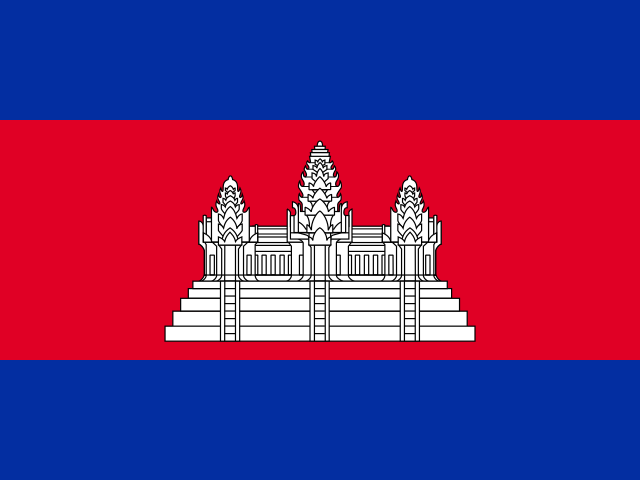
Angkor Wat's five lotus-bud towers represent Mount Meru, and its galleries bear long reliefs of the Ramayana and Mahabharata. At Ta Prohm giant tree roots grip the stones. Angkor Wat appears at the centre of Cambodia's flag.
Connections with Vietnam
Angkor is a familiar foreign destination for Vietnamese, reachable overland from Ho Chi Minh City via the Moc Bai border or by direct flight. Khmer architecture relates to Vietnam's Cham towers such as My Son and to the Khmer pagodas of the Mekong Delta.
In Japan
Japan has contributed greatly to Angkor's conservation: the Japanese Government Team for Safeguarding Angkor (JSA) restored parts of the Bayon, and Sophia University under Professor Ishizawa Yoshiaki has trained Cambodian experts for decades. In the 17th century a Japanese visitor, Morimoto Ukondayū, even left an inscription at Angkor Wat.
Visiting
One-, three- and seven-day passes are sold in Siem Reap. Sunrise at Angkor Wat is a classic experience; hire a tuk-tuk or bicycle. Cover shoulders and knees inside temples.
Vocabulary corner
Japanese: 遺跡 (iseki, ruins), 寺院 (jiin, temple), 浮彫 (ukibori, relief), クメール王朝 (Khmer dynasty), 修復 (shūfuku, restoration). Vietnamese: đền (temple), phù điêu (relief), Khmer (Khmer).
 Borobudur Temple Compounds
 My Son Sanctuary
 Taj Mahal