
Dinosaurs · 恐龙世界
Kamuysaurus カムイサウルス
かむいさうるす
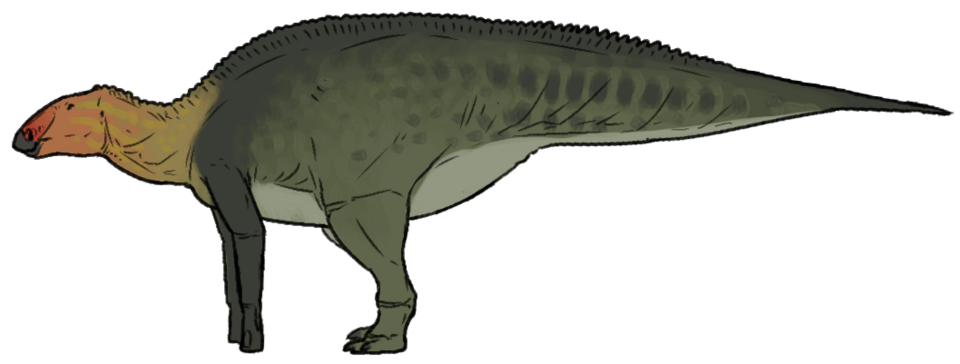
Kamuysaurus, nicknamed "Mukawaryu", is a duck-billed dinosaur found in Hokkaido. It is the most complete dinosaur skeleton ever dug up in Japan.
- Length
- about 8 m
- Estimated weight
- about 4–5 tonnes
- Diet
- Herbivore
Discovery and name
In 2003 an amateur collector found tail bones in Mukawa. Large excavations in 2013–2014 uncovered almost the whole skeleton, and the species was named Kamuysaurus japonicus in 2019.
Body and features
It was a hadrosaurid with a flat beak and hundreds of grinding teeth, probably with a low crest on its head. The skeleton belonged to an adult at least nine years old.
In Japan
Curiously, the fossil lay in rock formed under the sea. Scientists think the carcass drifted out to sea and sank, suggesting Kamuysaurus lived near the coast.
The skeleton has been studied at the Hokkaido University Museum and the Hobetsu Museum in Mukawa. Japan has other named dinosaurs too, such as Fukuiraptor and Fukuisaurus from Fukui.
Vocabulary corner
Japanese: 全身骨格 (complete skeleton), アイヌ語 (Ainu language), 神 (god / deity), 地層 (rock layer), 海岸 (coast).
Vietnamese: bộ xương toàn thân (complete skeleton), tiếng Ainu (Ainu language), thần (god / deity), tầng đá (rock layer), bờ biển (coast).
文中词汇
- カムイサウルス
- むかわ竜
- むかわ町
- 北海道ほっかいどうHokkaido (island, prefectural-level adm…
- 全身骨格
- ハドロサウルス科