
Marine & flying reptiles · 恐龙世界
Pteranodon プテラノドン
ぷてらのどん
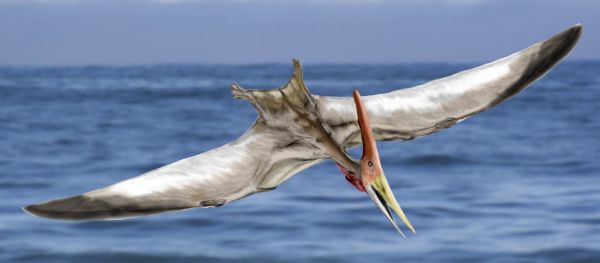
Pteranodon was a large pterosaur with a long head crest and a toothless beak that soared over North America's inland sea. It was not a dinosaur but a close relative.
- Wingspan
- about 6–7 m (large males)
- Estimated weight
- about 20–50 kg
- Diet
- Fish
Discovery and name
O. C. Marsh found the first fossils in Kansas in the 1870s and named Pteranodon in 1876. More than 1,000 specimens are known, making it one of the best understood pterosaurs.
Body and features
A pterosaur wing was a skin membrane stretched from an extremely long fourth finger to the leg, quite unlike a bird's feathered wing. Males had much bigger crests than females, probably for display. Hollow bones kept it light despite its wide wings.
How it lived
It soared over the sea like an albatross, catching fish near the surface. Its fossils often lie in marine sediments hundreds of kilometres from the old coastline, showing it flew long distances.
Vocabulary corner
Japanese: 翼竜 (pterosaur), 翼 (wing), 膜 (membrane), とさか (crest), 滑空 (gliding / soaring).
Vietnamese: thằn lằn bay (dực long) (pterosaur), cánh (wing), màng (membrane), mào (crest), bay lượn (gliding / soaring).