
Dinosaurs · 恐龙世界
Therizinosaurus テリジノサウルス
てりじのさうるす
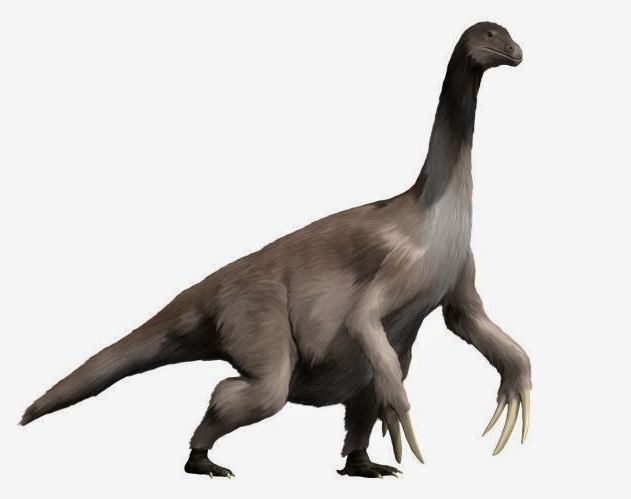
Therizinosaurus had the longest hand claws of any known animal, yet it probably ate mostly plants. It belonged to the theropods, distant relatives of T. rex and birds.
- Length
- about 9–10 m
- Estimated weight
- about 5 tonnes
- Diet
- Mainly plants
Discovery and name
In 1954 enormous claws were found in the Gobi Desert. At first scientists thought they belonged to a giant turtle; only when more arm and leg bones turned up did it become clear this was a dinosaur.
Body and features
The bony core of each claw was about 50 cm long, and the horny sheath in life made it even longer. Smaller relatives such as Beipiaosaurus from China had filament-like feathers, so Therizinosaurus may have been feathered too.
How it lived
Its pot-bellied body, long neck and small beaked head suggest it ate leaves. The long claws may have pulled branches down or warded off predators such as Tarbosaurus.
Vocabulary corner
Japanese: 爪 (claw), 大鎌 (scythe), 羽毛 (feather), くちばし (beak), ゴビ砂漠 (Gobi Desert).
Vietnamese: móng vuốt (claw), lưỡi hái (scythe), lông vũ (feather), mỏ (beak), sa mạc Gobi (Gobi Desert).