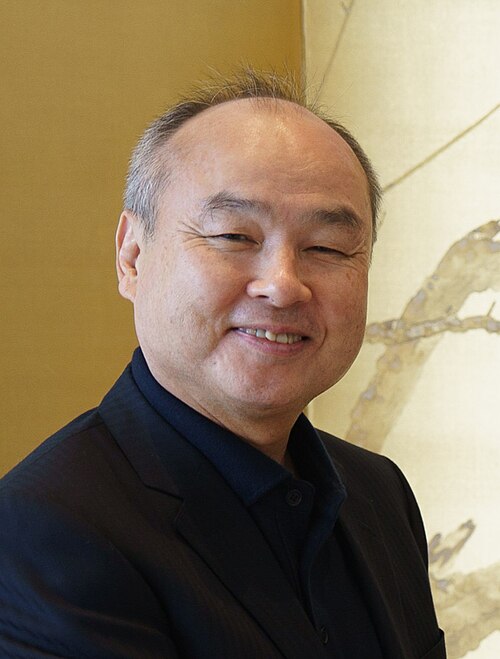
Science & business · Famous Japanese people
Kazuo Inamori 稲盛和夫
いなもり かずお
Kazuo Inamori (1932–2022) was a Japanese entrepreneur who founded the fine-ceramics group Kyocera (1959) and the telecoms company DDI, forerunner of KDDI (1984). He is known for the Kyocera Philosophy, "amoeba management" and the turnaround of Japan Airlines after its 2010 bankruptcy. In Japan he was called a "god of management".
- Birthplace
- Kagoshima
- Place of death
- Kyoto
- Education
- Faculty of Engineering, Kagoshima University (1955)

Early life
Inamori was born on 30 January 1932 in Kagoshima, southern Kyushu, into a family that ran a small printing business. His youth was marked by setbacks: he failed the entrance exam to the middle school he wanted, fell ill with tuberculosis as a child, and failed the Osaka University entrance exam. He later told these stories as lessons in keeping a positive attitude.
He studied applied chemistry in the Faculty of Engineering at Kagoshima University, graduating in 1955. Jobs were scarce, and he joined a small insulator maker in Kyoto, where he researched technical ceramics for electronic parts and developed a forsterite ceramic.
Founding Kyocera
In 1959, after a dispute with his superiors, Inamori left with a group of colleagues and founded Kyoto Ceramic with 3 million yen in capital, backed by acquaintances who believed in him. Its first product was a ceramic insulating part for television cathode-ray tubes.
The company soon became a supplier of ceramic packages for integrated circuits as the semiconductor industry boomed in the 1960s–70s. Kyoto Ceramic was renamed Kyocera in 1982 and absorbed the camera maker Yashica in 1983, later expanding into printers, phones, solar cells and ceramic knives.
Inamori served as president and chairman, becoming honorary chairman in 1997. He insisted Kyocera existed to pursue the material and spiritual happiness of all employees and to contribute to the progress of humankind and society, a line adopted as the corporate philosophy.
DDI and telecommunications
Japan privatised the state telephone company NTT in 1985 and opened the telecoms market. In 1984 Inamori founded Daini Denden (DDI) to compete with NTT and bring down long-distance call charges. He said that before deciding he asked himself repeatedly whether his motive was pure and free of self-interest.
DDI grew into a major carrier and in 2000 merged with KDD and IDO to form KDDI, Japan's second-largest mobile operator under the au brand. Inamori later served as its honorary senior adviser.
Rebuilding Japan Airlines
In January 2010 Japan Airlines filed for bankruptcy protection with huge debts, one of the largest failures of a Japanese non-financial company since the war. At the government's request Inamori, then 77 and with no airline experience, became chairman without pay.
He cut loss-making routes, slimmed the organisation, introduced accounting by small units and a JAL Philosophy in training, asking every employee to know the figures of their own unit. The airline returned to profit within a year, and in September 2012, about two years and eight months after the bankruptcy, it relisted on the Tokyo Stock Exchange.
The turnaround was hailed as a management feat, though critics noted that public funds, debt forgiveness, tax advantages from the bankruptcy process and large job cuts also played a part.
Philosophy and amoeba management
Amoeba management divides a company into small units of roughly 5–50 people, each keeping its own accounts like a small business and tracking value added per hour of work, so that every employee thinks like an owner and leaders emerge.
Inamori summed up success as: Result of life and work = Way of thinking × Passion × Ability. Because the way of thinking can be negative, a talented person with the wrong attitude still gets bad results. He made the simple question "What is the right thing to do as a human being?" his standard for decisions.
In 1983 he founded Seiwajuku, a school for owners of small and mid-sized firms that grew to thousands of members in Japan and abroad before it was dissolved in 2019. In 1997, after a diagnosis of stomach cancer, he took Buddhist orders at Enpuku-ji, a Rinzai temple in Kyoto. Books such as A Compass to Fulfillment (Ikikata, 2004) sold millions of copies in Japan and China.
Kyoto Prize and legacy
In 1984 Inamori used his own money to set up the Inamori Foundation and the Kyoto Prize, awarded each year in Advanced Technology, Basic Sciences, and Arts and Philosophy, and regarded as one of the most prestigious international prizes given in Japan. He also chaired the Kyoto Chamber of Commerce and Industry (1995) and was a foreign member of the Royal Swedish Academy of Engineering Sciences.
He died in Kyoto on 24 August 2022, aged 90. Alongside Matsushita Kōnosuke and Honda Sōichirō he is counted among the most influential business leaders of postwar Japan. Some scholars find his philosophy too spiritual to apply mechanically, yet amoeba management is still used by many Japanese companies and hospitals.
Connection with Vietnam
Several of Inamori's books have been published in Vietnamese, notably Ikikata (A Compass to Fulfillment) and works on his management philosophy, and they often appear on reading lists for Vietnamese entrepreneurs. Kyocera also has a factory in Vietnam (Kyocera Vietnam, Hai Phong). For Vietnamese staff at Japanese companies, ideas like unit accounting and owner-mindedness are familiar training topics.
Japanese corner
Name: 稲盛和夫 (Inamori Kazuo). Kyocera is 京セラ, short for 京都セラミック (Kyoto Ceramic); KDDI grew out of 第二電電 (Daini Denden, DDI).
Vocabulary: 経営 (keiei, management), 経営の神様 (god of management), アメーバ経営 (amoeba management), 哲学 (tetsugaku, philosophy), 創業者 (sōgyōsha, founder), 再建 (saiken, rebuilding), 破綻 (hatan, collapse), 京都賞 (Kyoto Prize), 生き方 (ikikata, way of life).