Science & business · Famous Japanese people
Tadashi Yanai 柳井正
やない ただし
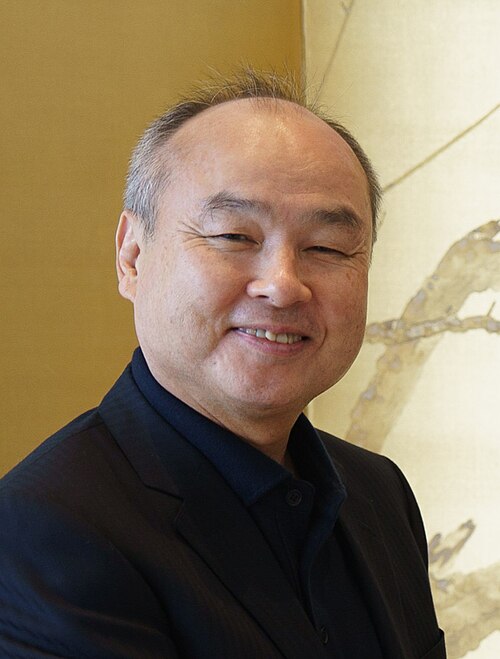
Tadashi Yanai (born 1949) is a Japanese businessman who founded the Uniqlo clothing chain and is chairman, president and CEO of Fast Retailing. Starting from his family's menswear shop in Ube, Yamaguchi, he built one of the world's largest apparel retailers and has for years been Japan's richest person.
- Birthplace
- Ube, Yamaguchi Prefecture
- Education
- Waseda University (Political Science and Economics, 1971)
- Field
- Business, apparel retail
Early life
Tadashi Yanai was born on 7 February 1949 in Ube, a coal and chemical industry town in Yamaguchi Prefecture, western Japan. His father, Hitoshi Yanai, ran the menswear shop Ogori Shoji and other local businesses; the family lived above the shop.
He studied political science and economics at Waseda University in Tokyo, graduating in 1971. By his own account he had no clear ambition as a student and little interest in the family business.
Taking over the family shop
After graduating, Yanai joined the Jusco supermarket chain (now AEON) but left after about nine months. In 1972 he returned to Ube to work in his father's shop.
The early years were rough: his rigid management drove away almost all the staff, and he ended up doing everything from sales to bookkeeping and buying himself. He later called himself arrogant, but the experience taught him every part of running a store. In 1984 he became president of Ogori Shoji.
The birth and growth of Uniqlo
Inspired by trips to the US and Europe, where self-service stores sold casual clothes like books or records, he opened "Unique Clothing Warehouse" in Fukuromachi, Hiroshima, in June 1984 — the direct forerunner of Uniqlo. The name was shortened to Uniqlo; the company tells the story that a "C" was mistaken for a "Q" when the trademark was registered in Hong Kong, and Yanai kept it.
Yanai soon adopted the SPA model (specialty store retailer of private label apparel): the company plans its own products, contracts partner factories (at first mainly in China) for large runs and sells them in its own stores. Cutting out middlemen let Uniqlo sell consistent-quality basics cheaply.
In September 1991 the company became Fast Retailing; it listed on the Hiroshima Stock Exchange in 1994 and later in Tokyo. The breakthrough came in 1998 with a store in Harajuku and a ¥1,900 fleece campaign; press reports say it sold around 26 million fleece items in 2000 alone, making Uniqlo a household name.
Going global: failure and comeback
Uniqlo opened in London in 2001 and Shanghai in 2002, but early results were poor and most UK stores closed. At home the fleece boom faded. In 2002 Yanai handed the president's post to Genichi Tamatsuka, but he returned to run the company himself in 2005.
He recounted this period in his book One Win, Nine Losses (2003), arguing that failure is inevitable and what matters is learning fast. Uniqlo then opened large flagships in New York (2006), London and Paris, and developed functional fabrics with Toray such as HEATTECH, AIRism and ultra-light down.
The group also added brands such as the cheaper GU (launched 2006) and Theory. Uniqlo now has more stores abroad than in Japan, with Asia as its main growth market.
Business philosophy
Yanai positions Uniqlo not as trend-chasing "fast fashion" like Zara or H&M but as "LifeWear" — simple, durable clothes for everyone, meant to last. Rather than constant new styles, it focuses on a small core range whose fabrics are improved year by year.
He is known for top-down management, very high targets and demanding that staff think like owners. He also made English the company's common language from 2012 to prepare for globalisation. His style is praised as decisive and criticised for putting heavy pressure on employees.
Assessment and legacy
Under Yanai, Fast Retailing became Asia's largest apparel retailer, with sales of about ¥3.1 trillion in fiscal 2024, and Forbes has for years ranked him Japan's richest person. He is seen as a model post-bubble Japanese entrepreneur: from the provinces, unafraid of failure, building a global brand.
At the same time, NGOs have criticised working conditions at some partner factories in Asia and cotton sourcing; the company responded by publishing its factory list and supply-chain human rights policies. Yanai also gives to education and medicine — Japanese media reported in 2020 a large donation to Kyoto University supporting Shinya Yamanaka's iPS cell research and Tasuku Honjo's cancer research.
Connection with Vietnam
On 6 December 2019 Uniqlo opened its first Vietnamese store, Uniqlo Dong Khoi, in Parkson Saigon Tourist Plaza (Le Thanh Ton and Dong Khoi streets, District 1, Ho Chi Minh City). Spanning more than 3,000 m² on three floors, it was then among the largest in Southeast Asia; Tuoi Tre reported long queues from early morning. More stores followed in Hanoi, Ho Chi Minh City and elsewhere.
Even before retail, Vietnam was an important production base: many of Fast Retailing's partner sewing and textile factories are in Vietnam, and "Made in Vietnam" labels are common on its products, part of a strategy to reduce reliance on China.
Japanese corner
His name is written 柳井正 (Yanai Tadashi); 正 means "right, upright". ユニクロ is the katakana for Uniqlo (from Unique Clothing); ファーストリテイリング is Fast Retailing.
Vocabulary: 衣料品 (iryōhin, apparel), 小売 (kouri, retail), 製造小売 (seizō kouri, SPA model), 店舗 (tenpo, store), 家業 (kagyō, family business), 創業者 (sōgyōsha, founder), 普段着 (fudangi, everyday clothes). 一勝九敗 (isshō kyūhai, "one win, nine losses") is the title of his book.