History & politics · Famous Japanese people
Tsuda Umeko 津田梅子
つだ うめこ
Tsuda Umeko (1864–1929) was a pioneering Japanese educator and one of five girls sent to study in the United States with the Iwakura Mission in 1871, when she was six. In 1900 she founded Joshi Eigaku Juku, forerunner of Tsuda University, to give women an advanced, independent education. Since 2024 her portrait has appeared on the 5,000-yen note.
- Birthplace
- Edo (Tokyo)
- Nationality
- Japanese
- Family
- Second daughter of agriculturalist Tsuda Sen

Background
Umeko was born in Edo in 1864, the second daughter of Tsuda Sen, who knew Dutch and English and was then an interpreter for the shogunate; he later became a well-known agriculturalist of the Meiji era. Her family was thus exposed early to Western culture.
In 1871 the Meiji government recruited girls to study in America so they could later contribute to women's education. Her father applied for her. Umeko was the youngest of the five girls who sailed with the Iwakura Mission: six when she boarded, she turned seven during the voyage.
Eleven years in America
In Washington, D.C., Umeko lived with Charles Lanman, an official of the Japanese legation, and his wife, who raised her like a daughter. She attended local schools, became a Protestant Christian, and studied Latin, French, literature, science and music.
In 1882, after about eleven years, she returned to Japan aged seventeen. She had nearly forgotten Japanese and found a society with no place for educated women. That experience, and the low status of Japanese women she witnessed, shaped the rest of her life.
Teaching and a second stay abroad
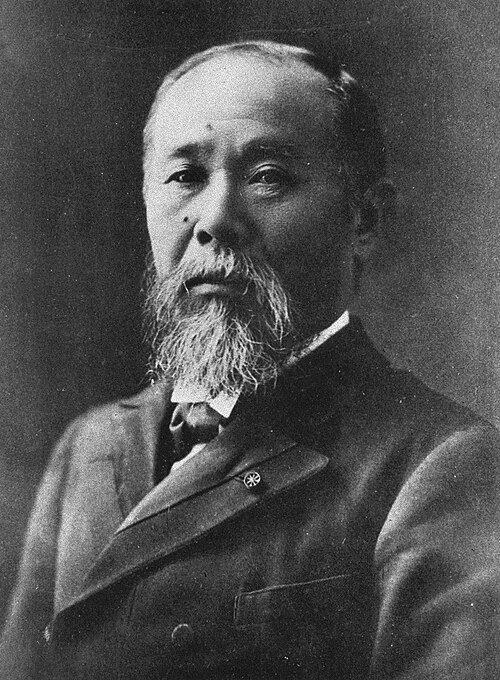
Back in Japan she lived for a time in the household of Itō Hirobumi, tutoring his family in English, and then taught English at the Peeresses' School for daughters of the nobility. She felt, however, that its education aimed mainly at producing good wives rather than independent women.
In 1889 she returned to America to study biology at Bryn Mawr College in Pennsylvania on a scholarship. She worked under Professor Thomas Hunt Morgan, later winner of the 1933 Nobel Prize in Physiology or Medicine, and co-authored a paper with him on the development of frog eggs. Though invited to stay on as a researcher, she went home in 1892. During this period she also raised a scholarship fund to let Japanese women study in the United States.
Joshi Eigaku Juku and Tsuda University
In 1900 she gave up a secure teaching post to open Joshi Eigaku Juku (Women's Institute for English Studies) in a rented house in Ichibanchō, Kōjimachi, Tokyo, with only about ten students in the first intake. Funds were scarce, coming mostly from small donations by American friends and supporters; her fellow former student Ōyama Sutematsu and the American educator Alice Bacon also helped.
The school offered advanced English, trained women as English teachers and stressed character and independence. At the opening ceremony she argued that true education must respect each student's individuality. Her goal was to produce women able to stand as equals and genuine partners of men.
She led the school for nearly twenty years until illness struck at 53, resigning about two years later. She never married and died in 1929. After the Second World War the school became Tsuda University, whose main campus is now in Kodaira, Tokyo.
Legacy
Tsuda Umeko is regarded as a trailblazer of higher education for Japanese women, alongside contemporaries such as Naruse Jinzō (Japan Women's University). Her graduates worked as teachers, translators and scholars, helping to change the image of Japanese women in the Meiji and Taishō eras.
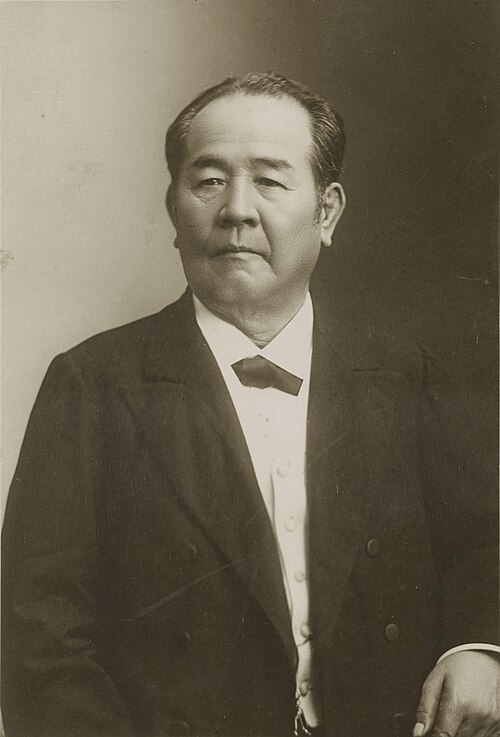
When Japan issued new banknotes in 2024, her portrait replaced Higuchi Ichiyō's on the 5,000-yen note, alongside Shibusawa Eiichi (10,000 yen) and Kitasato Shibasaburō (1,000 yen). Some scholars note that her views bore the marks of her time, focusing on educating an elite of women rather than political rights, so she is usually assessed in her late-19th-century context.
Relevance for Vietnamese readers
Tsuda Umeko had no direct link with Vietnam, but Vietnamese residents in Japan handle her portrait daily on the new 5,000-yen note. Her story of studying abroad young and returning to found a school also makes an interesting comparison with Phan Bội Châu's Đông Du ("Go East") movement a few decades later, which sent young Vietnamese to study in Japan.
Language corner
津田梅子 is read Tsuda Umeko; 梅 (ume) is the Japanese apricot blossom and the ending 子 (ko) was common in women's names. Vocabulary: 留学生 (ryūgakusei, international student), 女子教育 (joshi kyōiku, women's education), 岩倉使節団 (Iwakura shisetsudan, Iwakura Mission), 塾 (juku, private school; today a cram school), 五千円札 (gosen-en satsu, 5,000-yen note), 自立 (jiritsu, independence).
津田塾大学 (Tsuda-juku daigaku) is usually shortened to 津田塾. Japanese people sometimes nickname banknotes after their portraits, as with 諭吉さん for the old 10,000-yen note.
Vocabulary in this article
- 津田梅子
- 津田塾大学つだじゅくだいがくTsuda College
- 女子英学塾
- 岩倉使節団
- 留学生りゅうがくせいoverseas student; exchange student
- 女子教育
- 五千円札
- 新紙幣
- 華族女学校
- 自立じりつindependence; self-reliance