
Chemistry in daily life · Chemistry
Batteries 電池
でんち
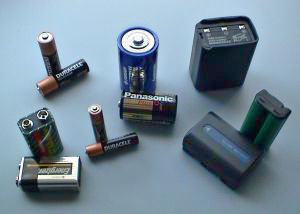
A battery turns chemical energy into electricity through redox reactions. Rechargeable batteries can be charged many times.
- Inventor of first battery
- Alessandro Volta (1800)
- Types
- Primary, rechargeable
- Examples
- Alkaline, lead-acid, lithium-ion
How a battery works
A battery has two electrodes separated by an electrolyte. At the negative electrode a reducing agent releases electrons; they flow through the outer circuit (lighting a bulb) to the positive electrode, where an oxidizing agent accepts them.
Volta and everyday batteries
In 1800 Alessandro Volta stacked zinc and copper discs with brine-soaked paper to make the first battery. Today alkaline batteries in TV remotes use zinc and manganese dioxide and are single-use.
Rechargeable batteries
Lead-acid batteries in motorbikes and cars are recharged by driving current backwards, reversing the reaction. Lithium-ion batteries in phones are light and energy-dense; their developers, including Yoshino Akira, won the 2019 Nobel Prize in Chemistry.
Safety and collection
Lithium-ion batteries that are crushed, punctured or charged wrongly can overheat and catch fire. Used batteries contain metals that may pollute, so they should go to collection points rather than ordinary bins.
Japanese – English terms
電池 (でんち) – battery; 正極 (せいきょく) – positive electrode; 負極 (ふきょく) – negative electrode; 電解質 (でんかいしつ) – electrolyte; 二次電池 (にじでんち) – rechargeable battery; 充電 (じゅうでん) – charging; リチウムイオン電池 (リチウムイオンでんち) – lithium-ion battery.