
Chemistry in daily life · Chemistry
Soaps and detergents せっけんと洗剤
せっけんとせんざい
Soap and detergent molecules have a water-loving head and an oil-loving tail, letting them pull greasy dirt off surfaces and into water.
- Key ingredient
- Surfactants
- Soap-making reaction
- Saponification of fats
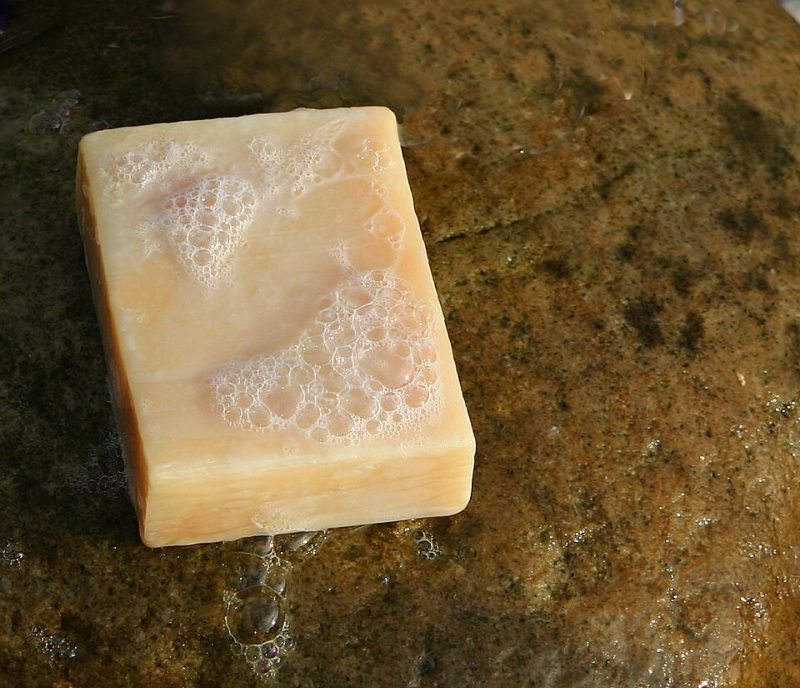
How soap is made
Heating fats (coconut oil, animal fat) with an alkali such as NaOH gives soap and glycerol. This reaction, saponification, has been used for thousands of years.
How soap cleans
The long tail of a soap molecule sticks to grease while the water-loving head faces outward. Many molecules surround an oil droplet to form a micelle, which water then rinses away. That is why washing with soap works better than water alone.
Synthetic detergents
In hard water, soap combines with Ca2+ and Mg2+ to form scum and works poorly. Synthetic detergents in laundry powder and dish soap still work in hard water and often include enzymes to break down protein stains.
Using cleaners safely
Never mix chlorine bleach with acidic cleaners, as toxic chlorine gas can form. In Japan such products carry the warning "まぜるな危険" (dangerous: do not mix).
Japanese – English terms
せっけん (せっけん) – soap; 洗剤 (せんざい) – detergent; 界面活性剤 (かいめんかっせいざい) – surfactant; けん化 (けんか) – saponification; ミセル (みせる) – micelle; 漂白剤 (ひょうはくざい) – bleach.