
Dinosaurs · The world of dinosaurs
Deinonychus デイノニクス
でいのにくす
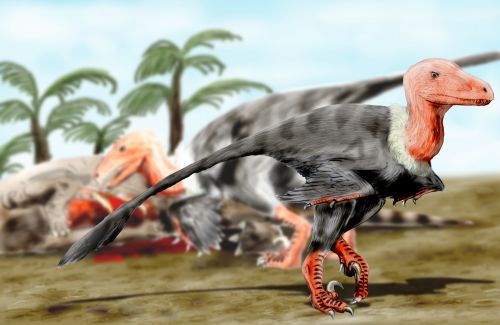
Deinonychus was a mid-sized predator with a large sickle claw, a relative of Velociraptor. Its discovery changed how scientists saw dinosaurs: as active, agile animals closely related to birds.
- Length
- about 3.3 m
- Estimated weight
- about 60–75 kg
- Diet
- Carnivore
Discovery and name
Palaeontologist John Ostrom described Deinonychus in 1969 from Montana fossils. He argued it was an agile, active hunter, reviving the idea that birds evolved from dinosaurs. This period became known as the "Dinosaur Renaissance".
Body and features
The second toe claw was about 12 cm long and could be held up off the ground while running to stay sharp. No feather impressions of Deinonychus itself are known, but its close relatives were feathered, so it almost certainly was too.
How it lived
Deinonychus bones have been found alongside the large plant-eater Tenontosaurus, leading some to suggest pack hunting. Others think they simply gathered to squabble over food, like modern birds of prey or crocodiles.
Vocabulary corner
Japanese: かぎ爪 (claw), 恐竜ルネサンス (Dinosaur Renaissance), 恒温 (warm-blooded), 群れ (pack), 猛禽類 (bird of prey).
Vietnamese: móng vuốt (claw), thời kỳ phục hưng khủng long (Dinosaur Renaissance), máu nóng (warm-blooded), bầy (pack), chim săn mồi (bird of prey).