
Dinosaurs · The world of dinosaurs
Oviraptor オヴィラプトル
おゔぃらぷとる
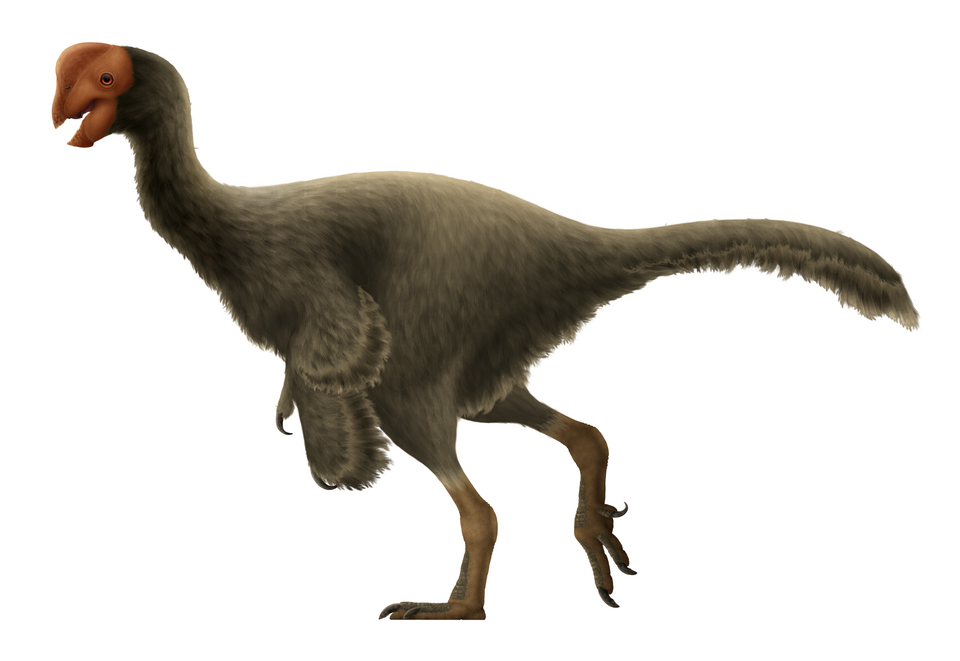
Oviraptor was a small, feathered dinosaur with a toothless beak. Its name means "egg thief" because of a misunderstanding: it was actually guarding its own eggs.
- Length
- about 1.6–2 m
- Estimated weight
- about 30–40 kg
- Diet
- Uncertain (possibly omnivorous)
Discovery and name
In 1923 an American Museum of Natural History expedition found an Oviraptor skeleton lying on a nest of eggs in Mongolia. Thinking it was stealing Protoceratops eggs, they named it "egg thief" in 1924.
Body and features
In the 1990s embryos found inside the same kind of eggs showed they belonged to oviraptorids. Its close relative Citipati has been found sitting on nests with arms spread over the eggs like a bird, showing they had arm feathers and cared for their eggs.
How it lived
Its strong, toothless beak may have handled seeds, fruit, shellfish or small lizards; its exact diet is still unclear. Some relatives had head crests like a cassowary.
Vocabulary corner
Japanese: 卵 (egg), 巣 (nest), 抱卵 (brooding), 胚 (embryo), 誤解 (misunderstanding).
Vietnamese: trứng (egg), ổ, tổ (nest), ấp trứng (brooding), phôi (embryo), hiểu lầm (misunderstanding).