
Cells & genetics · Biology
Gene 遺伝子
いでんし
A gene is a stretch of DNA carrying the information to make a product such as a protein. Genes influence traits such as blood type or eye color and are passed from parents to children.
- Term coined
- Wilhelm Johannsen, 1909
- Human protein-coding genes
- About 20,000
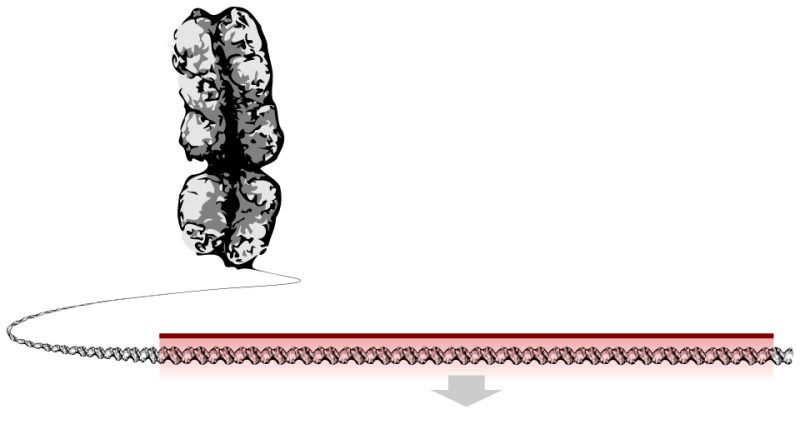
From gene to protein
Gene information is read in two steps: transcription (DNA to mRNA) in the nucleus and translation (mRNA to protein) at ribosomes. Every three nucleotides (a codon) specify one amino acid. This flow is called the central dogma of molecular biology.
Alleles, genotype and phenotype
A gene can have several versions called alleles. The ABO blood group gene, for example, has three main alleles. A person's combination of alleles is the genotype; the visible trait (blood type A, B, AB or O) is the phenotype.
Genes and environment
Genes do not decide everything. Height depends on many genes but also on nutrition and exercise. Scientists say the phenotype results from the interaction of genotype and environment.
Japanese–English vocabulary
Terms used in this article: 遺伝子 (いでんし) – gene; 転写 (てんしゃ) – transcription; 翻訳 (ほんやく) – translation; コドン – codon; 対立遺伝子 (たいりついでんし) – allele; 表現型 (ひょうげんがた) – phenotype.