
Cells & genetics · Biology
Protein タンパク質
たんぱくしつ
Proteins are macromolecules made of amino acid chains folded into 3D shapes. They act as enzymes, build muscle, carry oxygen, form antibodies and do countless jobs in the body.
- Monomer
- 20 standard amino acids
- Made at
- Ribosomes
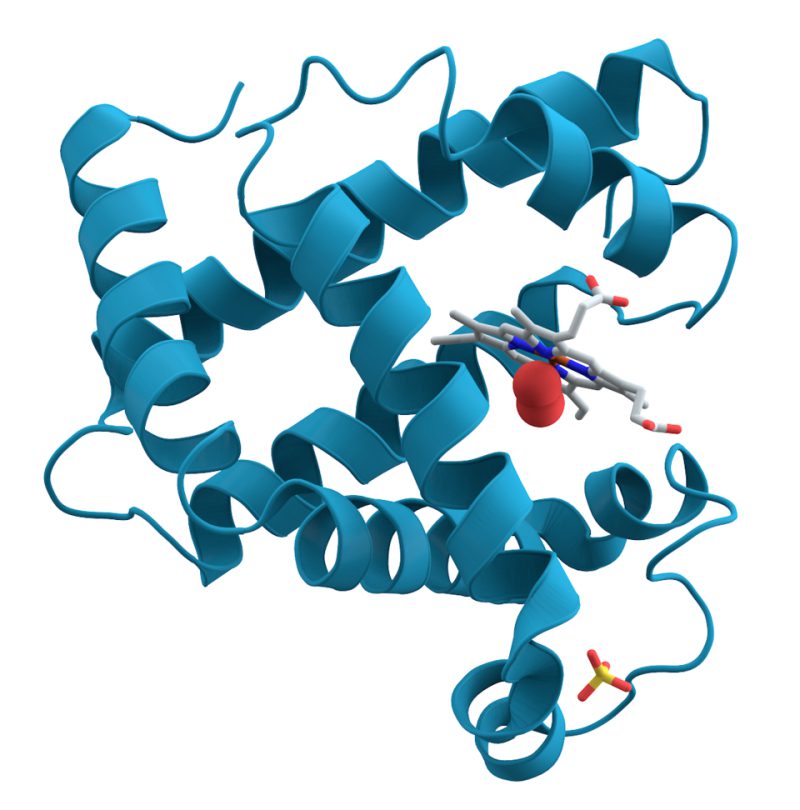
Structure
Amino acids join by peptide bonds into a polypeptide chain, like beads on a string. The chain folds into a specific shape, and shape determines function. Heat denatures proteins, which is why egg white turns solid when boiled.
Many functions
Amylase in saliva breaks down starch; hemoglobin carries oxygen; keratin forms hair and nails; antibodies recognize pathogens; insulin is a protein hormone regulating blood sugar.
Predicting protein structure
Determining a protein's shape once took years of experiments. Since 2020, AI programs such as AlphaFold have predicted the structures of a great many proteins with high accuracy, helping drug and biology research.
Japanese–English vocabulary
Terms used in this article: タンパク質 (たんぱくしつ) – protein; アミノ酸 (あみのさん) – amino acid; ペプチド結合 (ぺぷちどけつごう) – peptide bond; 酵素 (こうそ) – enzyme; 変性 (へんせい) – denaturation.