
The human body · Biology
Hormones ホルモン
ほるもん
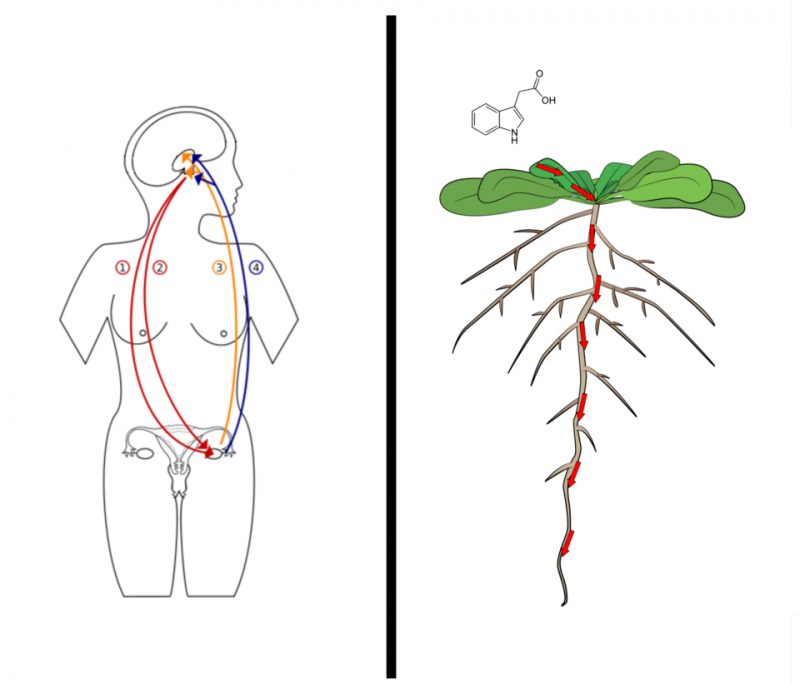
Hormones are chemical messengers released by endocrine glands into the blood, travelling to target organs to regulate growth, metabolism, reproduction and mood.
- First named hormone
- Secretin (Bayliss and Starling, 1902)
- Main glands
- Pituitary, thyroid, pancreas, adrenal, gonads
Nerves vs hormones
If the nervous system is like a phone call, fast and to one person, hormones are like letters by post: slower but longer-lasting and able to reach many organs at once. Only cells with the right receptor can read the letter.
Example: blood sugar
After a meal blood sugar rises; the pancreas releases insulin so cells take up glucose and the liver stores glycogen. When you are hungry, the pancreas releases glucagon so the liver releases glucose. This negative feedback maintains homeostasis.
Stress hormones
In danger, the adrenal glands release adrenaline: the heart races, breathing speeds up and muscles get extra energy for fight or flight. Cortisol helps the body cope with longer-term stress.
Japanese–English vocabulary
Terms used in this article: ホルモン – hormone; 内分泌腺 (ないぶんぴつせん) – endocrine gland; インスリン – insulin; 血糖値 (けっとうち) – blood glucose level; 恒常性 (こうじょうせい) – homeostasis; 副腎 (ふくじん) – adrenal gland.