
The human body · Biology
Digestive system 消化
しょうか
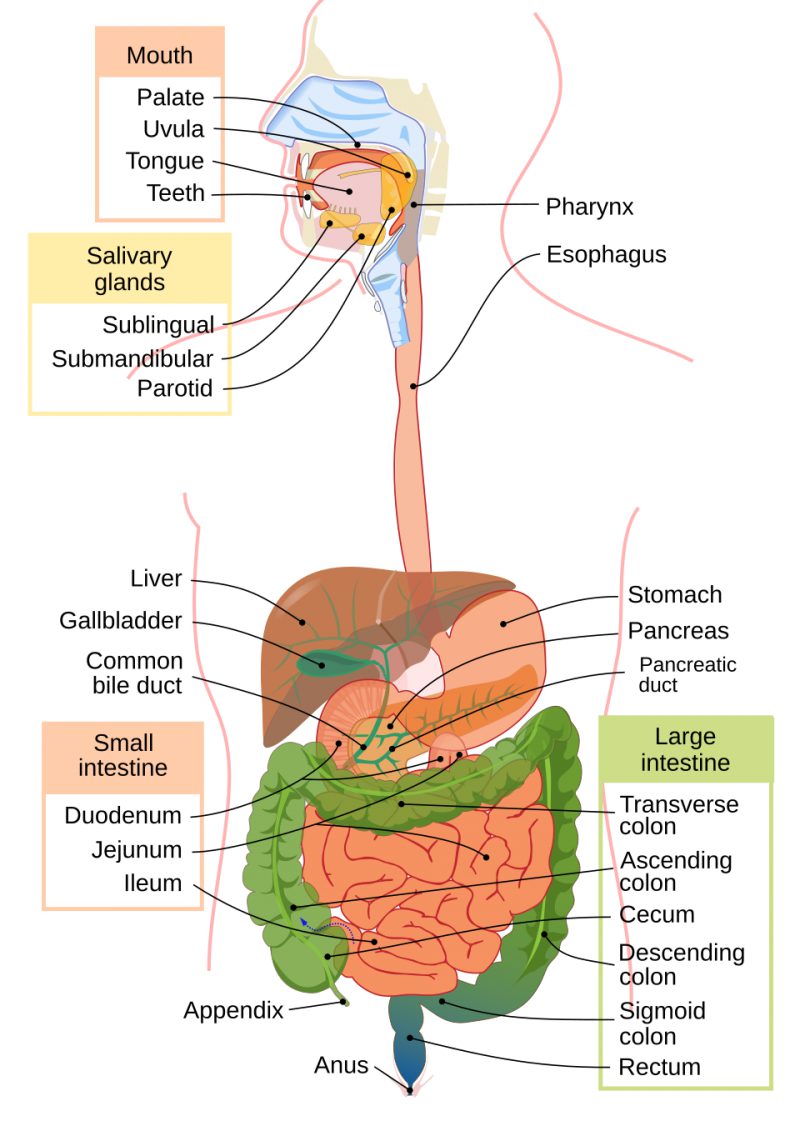
The digestive system breaks food into simple substances such as sugars, amino acids and fatty acids for absorption, then removes what cannot be used.
- Route
- Mouth → esophagus → stomach → small intestine → large intestine
- Digestive glands
- Salivary glands, liver, pancreas
Mechanical and chemical digestion
Teeth grind and the stomach churns food: that is mechanical digestion. Enzymes do the chemical work: salivary amylase starts breaking down starch (which is why rice tastes sweet if you chew it long), pepsin in the stomach breaks down protein, and pancreatic lipase digests fat.
The small intestine absorbs
The small intestine is several meters long, and its wall is covered with countless tiny villi, like the loops of a towel, creating a huge absorption area. Nutrients pass through the villi into blood and lymph. Bile from the liver emulsifies fat so enzymes can act.
The large intestine and gut microbes
The large intestine absorbs water and forms feces. It is also home to trillions of gut bacteria that break down fiber and make some vitamins. Scientists are actively studying the roles of this microbiome.
Japanese–English vocabulary
Terms used in this article: 消化 (しょうか) – digestion; 消化酵素 (しょうかこうそ) – digestive enzyme; 胃 (い) – stomach; 小腸 (しょうちょう) – small intestine; 柔毛 (じゅうもう) – villus; 腸内細菌 (ちょうないさいきん) – gut bacteria.