
Mechanics & energy · Physics
Temperature and thermodynamics 熱力学
ねつりきがく
Temperature tells how hot or cold something is and reflects molecular motion. Thermodynamics studies how heat and work convert into each other, the basis of engines, fridges and air conditioners.
- Temperature units
- Kelvin (K), degree Celsius (°C)
- Absolute zero
- 0 K = −273.15 °C
- Pioneers
- Carnot, Clausius, Kelvin
Temperature and heat
Higher temperature means molecules move faster. Heat is energy flowing from hot to cold. A hot cup of tea cools until it matches room temperature: thermal equilibrium.
Heating needs Q = m × c × Δt. Water has a high specific heat, so seas warm and cool more slowly than land.
Three ways heat travels
Conduction: a metal spoon in hot soup gets hot along its handle. Convection: water at the bottom of a pot warms, becomes lighter and rises. Radiation: we feel the Sun's warmth even though space between us is a vacuum.
Laws of thermodynamics
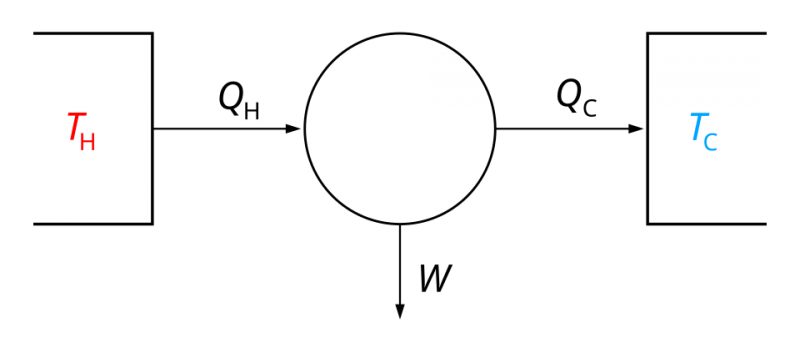
The first law is energy conservation: ΔU = Q + W. The second law says heat does not flow by itself from cold to hot, and no heat engine turns all heat into work. A fridge must use electricity to "pump" heat out.
Japanese – English terms
温度 (おんど) – temperature; 熱量 (ねつりょう) – heat; 比熱 (ひねつ) – specific heat; 熱平衡 (ねつへいこう) – thermal equilibrium; 対流 (たいりゅう) – convection; 熱力学第二法則 (ねつりきがくだいにほうそく) – second law of thermodynamics; 熱機関 (ねつきかん) – heat engine.