Linked to Vietnam · 日本名人
Asaba Sakitarō 浅羽佐喜太郎
あさば さきたろう
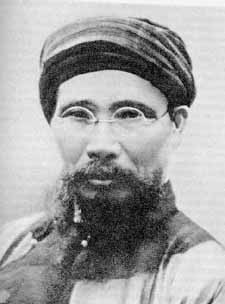
Asaba Sakitarō (1867–1910) was a physician from Shizuoka, known for his kindness to poor patients and as a benefactor of Vietnam's Đông Du (Go East) movement: when Phan Bội Châu and Vietnamese students in Japan were destitute, he gave them a large sum without conditions. In 1918 Phan Bội Châu returned to Japan to erect a memorial to him in Asaba village (now Fukuroi), a stone that has become a symbol of Vietnam–Japan friendship.
- Hometown
- Umeyama, Tōtōmi Province (now Fukuroi, Shizuoka)
- Nationality
- Japanese
- Education
- Medicine, Tokyo Imperial University
Life and medical career
Asaba Sakitarō was born in 1867, the last year of the Edo period, in Umeyama village in Tōtōmi Province, now part of Fukuroi in western Shizuoka, into a prominent local family. The area later took the name Asaba village, after his family.
He studied medicine at Tokyo Imperial University, Meiji Japan's leading school, and opened clinics in Kōzu near Odawara in Kanagawa and in his home village. Locals remembered him as a doctor who charged poor patients nothing and sometimes gave them money for food and medicine; he also donated to local fire brigades and schools.
Asaba suffered from tuberculosis for years. A major flood in 1910 exhausted him and worsened his illness, and he died on 25 September 1910, aged 43. Apart from his link with Phan Bội Châu, little is documented about him; most of what is known comes from Phan's memoirs and local research in Fukuroi.
Background: the Đông Du movement
In the early 20th century, after Japan's victory over Russia in 1905, the patriot Phan Bội Châu came to Japan seeking help for independence from France. On the advice of Japanese politicians such as Inukai Tsuyoshi and Ōkuma Shigenobu, he launched the Đông Du (Go East) movement, sending young Vietnamese to study in Japan; at its peak there were about 200 students, many at the Tokyo Dōbun Shoin.
In 1907 Japan and France signed an agreement, and under French pressure the Japanese authorities began dispersing the Vietnamese students in 1908–1909. Funds from home were cut off, and many students could not pay for food, lodging or passage home.
The encounter and the gift
According to Phan Bội Châu's memoirs and Japanese sources, in 1907 a Vietnamese student, Nguyễn Thái Bạt, collapsed by the roadside from hunger and exhaustion; Dr Asaba took him in and paid his school fees. Through him Phan learned of the doctor.
When the movement ran out of money, Phan wrote to Asaba asking for help although they had never met. Asaba promptly sent a large sum – usually given as about 1,700 yen, a very substantial amount at the time – saying it need not be repaid. The money helped many students survive and leave for home or China.
Details such as the exact amount and how they met rest mainly on Phan's chronological memoir, so sources differ slightly. Nothing suggests Asaba had political motives; he is remembered as acting from humanitarian conviction.
The 1918 memorial
In 1917 Phan Bội Châu secretly returned to Japan to find his benefactor, only to learn that Asaba had died. The following year, though a fugitive and short of money, he and the people of Asaba village raised funds for a stone stele near Asaba's grave at Jōrin-ji temple.
The stele, about 2.27 m tall, bears a classical Chinese inscription composed by Phan expressing the gratitude of himself and his comrades to a doctor who helped them in distress without seeking reward. It cost about 200 yen, much of it contributed by villagers when they learned Phan could not afford it. It is now a designated cultural property of Fukuroi.
Legacy and commemoration
For decades the story was little known outside the area. From the late 20th century researchers, the local Asaba association and Fukuroi city revived his memory; the story is taught to elementary pupils in Fukuroi, and Vietnamese delegations, including officials and embassy staff, regularly visit the stele.
On 22 September 2018 Fukuroi held a ceremony for the stele's centenary, attended by representatives of Shizuoka, Nghệ An province (Phan's birthplace), descendants of both families and Vietnamese residents. In 2013 the Japan–Vietnam co-produced TV drama The Partner dramatised their friendship.
Connection with Vietnam
For Vietnamese, Asaba Sakitarō is a Japanese figure woven into their modern history: his name appears in Phan Bội Châu's memoirs and in writing on the Đông Du movement. A friendship monument stands at the Phan Bội Châu memorial site in Huế, Nghệ An province and Fukuroi maintain exchanges, and the story is retold at anniversaries of Vietnam–Japan diplomatic relations (established 1973).
Japanese corner
Name: 浅羽佐喜太郎 (Asaba Sakitarō). The ending 〜太郎 (-tarō) was common in Meiji men's names and suggests an eldest son. 東遊運動 (Tōyū undō) is the Go East movement; 潘佩珠 is Phan Bội Châu.
Vocabulary: 恩人 (onjin, benefactor), 記念碑 (kinenhi, memorial stone), 医師 (ishi, physician), 援助 (enjo, aid), 留学生 (ryūgakusei, international student), 友好 (yūkō, friendship), 日越 (Nichi-Etsu, Japan–Vietnam).