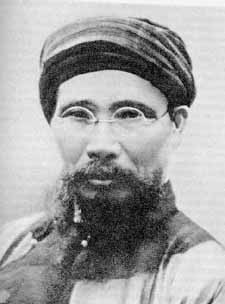
Linked to Vietnam · 日本名人
Prince Cường Để 彊柢
クオン・デ
Cường Để (1882–1951), titled Marquis Kỳ Ngoại, was a prince of the Nguyễn dynasty, a fifth-generation descendant of Emperor Gia Long through Crown Prince Cảnh. Chosen by Phan Bội Châu as leader of the Duy Tân Hội, he went to Japan in 1906, co-led the Đông Du (Go East) movement and spent nearly half a century in exile, mostly in Tokyo, where he died in 1951.
- Birth name
- Nguyễn Phúc Dân
- Origin
- Huế; Nguyễn imperial family
- Title
- Marquis Kỳ Ngoại
Family and early life
Born Nguyễn Phúc Dân in Huế on 28 February 1882, Cường Để was the son of Nguyễn Phúc Tăng Như. He belonged to the line of Crown Prince Cảnh, the eldest son whom Nguyễn Ánh (later Emperor Gia Long) had sent to France as a pledge when seeking French help. Because Cảnh died young and the throne passed to the Minh Mạng branch, the line stood outside the centre of power, yet many still saw it as the senior, legitimate branch.
He grew up when the French protectorate had reduced the Huế court to a formality, and anti-French groups soon took notice of him. According to the Vietnamese newspaper Tiền Phong, envoys of the Cần Vương resistance approached him after Emperor Hàm Nghi's capture, but they died before anything came of it.
He married Lê Thị Trân (1883–1956) and had three children. After he left the country, his wife and children were held by the colonial authorities for years, a heavy price for his political path.
The Duy Tân Hội and departure for Japan
Around 1903–1904 Phan Bội Châu met Cường Để in Huế. After a meeting in Quảng Nam in 1904 the Duy Tân Hội (Reform Society) was founded with him as its head: the scholar-patriots needed a royal figure to rally a gentry and populace still loyal to the Nguyễn house.
Phan Bội Châu reached Japan in 1905 and Cường Để slipped out to join him in 1906. According to Tuổi Trẻ, he was taken to Tokyo to meet Ōkuma Shigenobu and Inukai Tsuyoshi. The two politicians refused to supply arms but advised training talent, so the strategy shifted from seeking aid to seeking education – the start of the Đông Du movement that sent young Vietnamese to study in Japan.
During these years Cường Để wrote appeals that were smuggled home to recruit students and raise funds. At its peak some 200 Vietnamese students were in Japan, mostly at the Tōa Dōbunkai school and at military and private academies.
Expulsion and wandering years
In 1907 Japan and France signed an agreement to respect each other's interests in Asia. Under French pressure Japan disbanded the Vietnamese student body in 1908–1909 and then made Phan Bội Châu and Cường Để leave (sources give 1909 or 1910). The Đông Du movement collapsed.
Cường Để moved through China, Siam and Europe, keeping in touch with exile groups. In 1912 the Việt Nam Quang Phục Hội (Vietnam Restoration Society) was founded in Guangzhou, inspired by the Xinhai Revolution, with him as nominal leader. Around 1915 he returned to Tokyo and thereafter lived mainly in Japan, at times under assumed names to avoid surveillance.
Japan, the Restoration League and 1945
In Tokyo Cường Để was sheltered by politicians and pan-Asianists, among them Inukai Tsuyoshi. He often lived in hardship; according to Tiền Phong, in the early 1930s he still housed Vietnamese revolutionaries arriving in Japan despite close watch by Japanese police. After Phan Bội Châu's arrest in 1925 he headed the Restoration Society.
In 1939, as Japan prepared its advance into Southeast Asia, the group was reorganised as the Việt Nam Phục Quốc Đồng Minh Hội (League for the Restoration of Vietnam), pinning its hopes on Japanese help to oust France. In the early 1940s he was assigned to radio broadcasting work in Taipei.
In March 1945 Japan overthrew the French administration in Indochina. Many supporters hoped he would be installed as emperor, but Japan kept Bảo Đại and backed the Trần Trọng Kim government; Cường Để was not brought home, and his movement quickly faded.
Final years
After the war Cường Để stayed in Tokyo and tried several times to return home via Thailand and Hong Kong, without success. He died of cancer in Tokyo on 6 April 1951, aged 69 (some sources give 5 April).
His ashes were divided: part was taken to Tây Ninh in 1954 by the Cao Đài leader Phạm Công Tắc, part went to South Vietnam in 1957, and, at his wish, part was interred in the grave of the patriot Trần Đông Phong at Zōshigaya Cemetery in Tokyo, a grave Cường Để himself had built. A tomb for him also exists in Huế.
Assessment
Cường Để symbolises the "look to Japan" strategy of early 20th-century Vietnamese nationalism: he helped launch Đông Du, one of the earliest Vietnamese study-abroad movements, yet his life also shows the limits of relying on a great power pursuing its own interests.
Views of him differ. Some see a patriotic prince who gave his whole life to exile; others criticise his ties to Japanese militarists during the Second World War. As a writer in Tiền Phong put it, his positions were at times limited, so an objective judgement is not simple.
Vietnam–Japan connections
Traces of Đông Du linked to Cường Để survive in Japan: Trần Đông Phong's grave at Zōshigaya Cemetery in Tokyo, where part of his ashes rest; Yokohama's Chinatown, once home to the movement's base, Bính Ngọ Hiên; and the memorial to Dr Asaba Sakitarō in Fukuroi, Shizuoka, erected by Phan Bội Châu in 1918 to thank the Japanese doctor who helped Vietnamese students.
Vietnamese visitors to Japan today often include these sites in trips tracing the history of the two countries' relations.
Japanese corner
Japanese writes his name in katakana クオン・デ, with the characters 彊柢; his title 畿外侯 rarely appears in ordinary texts. The Đông Du movement is 東遊運動 (tōyū undō).
Vocabulary: 亡命 (bōmei, exile), 皇族 (kōzoku, imperial family), 阮朝 (Genchō, Nguyễn dynasty), 留学生 (ryūgakusei, overseas student), 仏印 (Futsuin, French Indochina), 帰国 (kikoku, returning home), 分骨 (bunkotsu, dividing ashes).