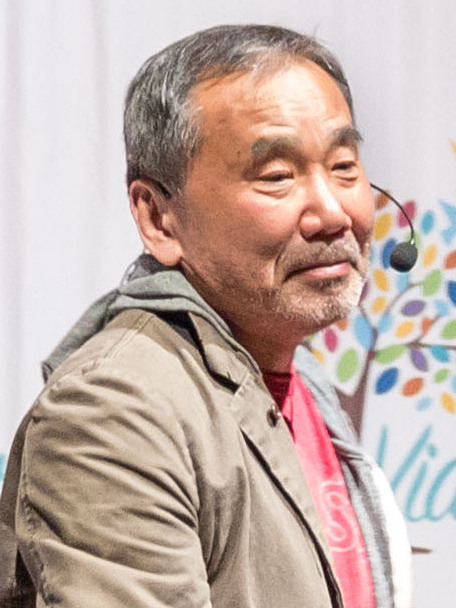
Literature · 日本名人
Mishima Yukio 三島由紀夫
みしま ゆきお
Mishima Yukio (1925–1970) was one of the most gifted and controversial writers of postwar Japan, author of Confessions of a Mask, The Sound of Waves, The Temple of the Golden Pavilion and The Sea of Fertility tetralogy. On 25 November 1970, after a failed call for the Self-Defense Forces to rise up, he committed seppuku at the Ichigaya base in Tokyo.
- Birthplace
- Yotsuya, Tokyo (now Shinjuku)
- Real name
- Hiraoka Kimitake
- Education
- Gakushūin; Law, Tokyo Imperial University (1947)

Family and youth
Mishima was born Hiraoka Kimitake on 14 January 1925 in Yotsuya, Tokyo, into a family of officials: his grandfather had been governor of Karafuto (Sakhalin) and his father worked in the agriculture ministry. Until he was twelve he was kept by his grandmother Natsuko, of samurai descent and nervously ill, and rarely played with other children – a childhood later echoed in Confessions of a Mask.
From 1931 he attended Gakushūin, the school for the aristocracy, where his literary talent was noticed early. In 1941, aged 16, he published A Forest in Full Bloom in the journal Bungei Bunka, first using the pen name Mishima Yukio.
He graduated top of his class in 1944 and entered the law faculty of Tokyo Imperial University. Called up in 1945, he was misdiagnosed with a lung condition and exempted; the sense of having survived while his generation went to war haunted him for years.
Literary breakthrough
In 1946 he took manuscripts to Kawabata Yasunari, who placed his story Tabako in the magazine Ningen, beginning a lifelong mentorship. In 1947 he graduated and joined the Finance Ministry, but resigned after nine months to write full time.
The autobiographical novel Confessions of a Mask (1949), about a young man hiding his homosexual desires behind a mask of normality, caused a sensation and made him a literary star at 24. It was followed by Thirst for Love (1950), The Blue Period (1950) and Forbidden Colors (1951–1953).
In 1951–1952 he travelled around the world and was especially taken with Greece. The classical beauty and harmony of body and mind he found there shaped his later work and outlook.
Major works
The Sound of Waves (1954) is the innocent love story of a young fisherman and a diver's daughter on Kamishima island in Mie, inspired by the Greek Daphnis and Chloe; it was a bestseller and filmed several times. The Temple of the Golden Pavilion (1956), based on a young acolyte's arson of Kinkaku-ji in 1950, explores an obsession with absolute beauty; many critics consider it his masterpiece.
He was also a fine dramatist: Five Modern Nō Plays reset classical Noh in the present, while Rokumeikan (1956) and Madame de Sade (1965) are still staged in Japan and abroad. He wrote kabuki plays and acted in films.
The story Patriotism (1961) depicts a lieutenant who commits seppuku after the 26 February 1936 incident; he directed and starred in a 1966 film version. The Sea of Fertility tetralogy (1965–1970) – Spring Snow, Runaway Horses, The Temple of Dawn and The Decay of the Angel – follows one soul through four reincarnations; he delivered the final manuscript on the morning of his death.
Style and ideas
Mishima's prose is richly visual, tightly built and rhetorical, drawing on classical Japanese literature and on Europeans such as Radiguet, Thomas Mann and Greek tragedy. Recurring themes are beauty and death, body and words, the falseness of the self, and nostalgia for a lost traditional Japan.
From the mid-1950s he took up bodybuilding, kendo and karate, seeing physical training as a way past the frailty of his childhood; his essay Sun and Steel (1968) sets out his ideal of bunbu ryōdō, the union of letters and martial arts.
Politically, in the late 1960s he increasingly exalted the emperor as the centre of Japanese culture and attacked the postwar constitution and materialism. In 1969 he held a famous debate with left-wing Zenkyōtō students at the University of Tokyo.
The Tate no Kai and the Ichigaya incident
In 1968 he formed the Tate no Kai (Shield Society), a private militia made up mostly of students, which trained several times with the Ground Self-Defense Force.
On 25 November 1970 Mishima and four members, including Morita Masakatsu, entered the Ground Self-Defense Force's Ichigaya camp in Tokyo, tied up the commandant and occupied his office. From the balcony he urged the troops to rise up and revise the constitution, but was jeered. He then committed seppuku, and Morita followed him; the event is known as the Mishima Incident.
His death shocked Japan and the world. Prime Minister Satō Eisaku called it madness; many writers and intellectuals were stunned, while the right celebrated him. A memorial called Yūkoku-ki is held every 25 November. His grave is at Tama Cemetery in Tokyo.
Assessment and legacy
Mishima was nominated several times for the Nobel Prize in Literature in the 1960s, according to Swedish Academy records released after 50 years; in 1968 the prize went to his mentor Kawabata. He is among the most translated Japanese writers, with English versions by Donald Keene, Ivan Morris, Meredith Weatherby and others.
Views of him differ sharply: some celebrate a genius who lived and died by his aesthetics, others criticise his ultranationalism and see his death as tragic theatre. Many scholars urge separating judgement of his writing from his political act.
Paul Schrader's film Mishima: A Life in Four Chapters (1985) and a 2020 documentary about the Zenkyōtō debate show his lasting fascination. The Mishima Yukio Literary Museum in Yamanakako, Yamanashi, holds his manuscripts and papers.
Connection with Vietnam
Many of Mishima's works are available in Vietnamese, including The Temple of the Golden Pavilion (translated in the South before 1975 and reissued later), The Sound of Waves, Confessions of a Mask and Spring Snow. He is a standard author in Japanese literature courses at Vietnamese universities.
The Temple of Dawn in The Sea of Fertility is partly set in Thailand and India; Vietnam does not appear directly in his work.
Japanese corner
三島由紀夫 (Mishima Yukio) is a pen name; his real name was 平岡公威 (Hiraoka Kimitake). 三島事件 (Mishima jiken) is the 1970 incident and 憂国忌 (Yūkoku-ki) his memorial day.
Vocabulary: 仮面 (kamen, mask), 告白 (kokuhaku, confession; also a declaration of love), 潮騒 (shiosai, sound of the surf), 金閣寺 (Kinkaku-ji), 豊饒 (hōjō, fertility), 輪廻転生 (rinne tenshō, reincarnation), 文武両道 (bunbu ryōdō, letters and arms), 割腹 (kappuku, disembowelment).
文中词汇
- 三島由紀夫
- 平岡公威
- 仮面の告白かめんのこくはくConfessions of a Mask (1949 novel by Yu…
- 潮騒しおさいroar of the sea; sound of waves
- 金閣寺きんかくじKinkakuji (temple in Kyoto); Golden Pav…
- 憂国ゆうこくpatriotic concern for the future of one…
- 豊饒の海ほうじょうのうみThe Sea of Fertility (tetralogy by Mish…
- 近代能楽集
- 楯の会
- 三島事件
- 文武両道ぶんぶりょうどうbeing accomplished in both the literary…
- 憂国忌ゆうこくきanniversary of Yukio Mishima's death (N…