History & politics · 日本名人
Shibusawa Eiichi 渋沢栄一
しぶさわ えいいち
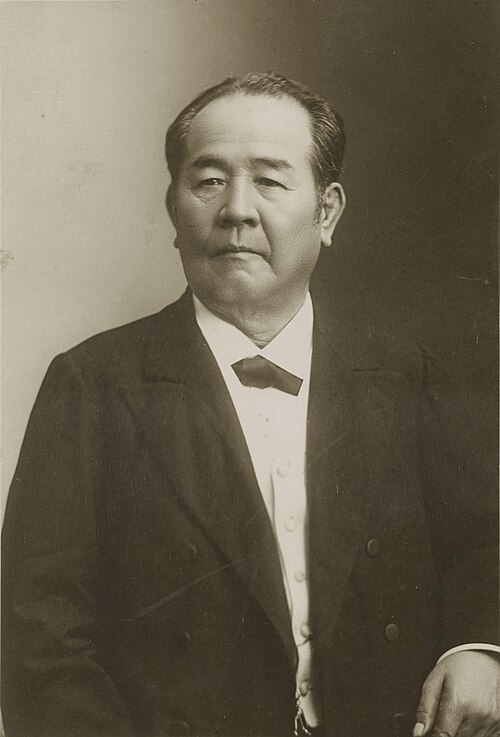
Shibusawa Eiichi (1840–1931) was a Meiji-era businessman and economic reformer often called the "father of Japanese capitalism". He founded Japan's first modern bank and helped establish some 500 companies and around 600 educational and charitable organisations. Since July 2024 his portrait has appeared on the new 10,000-yen note.
- Birthplace
- Chiaraijima village, now Fukaya, Saitama Prefecture
- Field
- Business, banking, finance, philanthropy
- Period
- Late Edo to early Shōwa
Early life
Shibusawa Eiichi was born in 1840 in Chiaraijima, Musashi Province (now Fukaya, Saitama Prefecture), into a prosperous farming family that grew crops, raised silkworms and traded in indigo. As a boy he travelled with his father buying indigo, learning arithmetic and negotiation, while his cousin Odaka Atsutada taught him the Confucian Analects and Chinese classics.
Resentment at the arrogance of domain officials towards farmers turned the young man against the shogunate's rigid class system. In the early 1860s he went to Edo to study swordsmanship and Confucianism and joined the "revere the emperor, expel the barbarians" movement. In 1863 he and his friends planned to seize Takasaki Castle and burn the foreign settlement in Yokohama, but abandoned the plot.
From Tokugawa retainer to Paris
In 1864, through an introduction, he entered the service of Hitotsubashi Yoshinobu in Kyoto, an ironic turn for a man who had plotted against the shogunate. He proved an able administrator, reforming the Hitotsubashi house's finances and recruiting troops. When Yoshinobu became the 15th Tokugawa shogun in 1866, Shibusawa became a direct shogunal retainer.
In 1867 he accompanied Yoshinobu's younger brother Tokugawa Akitake to the Paris Exposition as the delegation's accountant and quartermaster. During about a year and a half in Europe he studied banks, joint-stock companies, railways and factories, and noticed that merchants there were respected as much as officials. What he learned in France became the foundation of his later career.
When he returned at the end of 1868 the shogunate had fallen. He went to Shizuoka, where Yoshinobu lived in retirement, and in 1869 founded the Shōhō Kaisho, a combined banking and trading body regarded as one of Japan's first joint-stock companies.
Meiji Ministry of Finance
In 1869, at Ōkuma Shigenobu's invitation, Shibusawa joined the Meiji government. At the Ministry of Finance he helped draft a wave of reforms: land surveys and the land tax, a new currency system, a banking system under the National Bank Regulations (1872), standardised weights and measures, and plans for the Tomioka silk mill.
In 1873, after clashing with other leaders over the budget — he favoured fiscal restraint — he resigned together with Inoue Kaoru. From then on he chose a career in private business, convinced that a rich and strong nation required raising the status of businesspeople.
Founder of some 500 companies
In 1873 he became superintendent, and in 1875 president, of the First National Bank (Dai-ichi Kokuritsu Ginkō), Japan's first modern bank and a forerunner of today's Mizuho. The same year he founded the paper company Shōshi Kaisha, later Oji Paper.
Over the following decades he helped found or run some 500 companies in almost every sector, including the Tokyo Stock Exchange, Osaka Spinning, Nippon Railway, Tokyo Gas, the Imperial Hotel, Sapporo Beer, NYK Line and Tokio Marine. He also set up the Tokyo Chamber of Commerce (1878) and chaired it.
Unlike family-run zaibatsu such as Mitsui and Mitsubishi, Shibusawa built no empire of his own. He advocated gappon shugi, gathering capital and talent from many people through joint-stock companies for the common good. In 1916 he retired from all his business posts.
The Analects and the Abacus
Shibusawa's central idea was the "unity of morality and economy". In "The Analects and the Abacus" (1916), a collection of his talks, he argued that profit and righteousness are not at odds: business should follow Confucian ethics, and true wealth is wealth earned honestly that benefits society.
Japanese and foreign managers often cite this idea in discussions of business ethics, corporate social responsibility and stakeholder capitalism, and the book is still reprinted and translated.
Education, welfare and private diplomacy
He was involved in some 600 social organisations. From 1876 until his death he ran the Tokyo Yōikuin, a home for orphans, the elderly and people with disabilities. He helped found the commercial school that became Hitotsubashi University, Japan Women's University and Tokyo Jogakkan, and supported hospitals and the Red Cross. After the Great Kantō Earthquake of 1923 he organised relief.
Abroad, he led a business delegation to the United States in 1909 and made several more visits to ease tensions over Japanese immigration. In 1927 he launched the Japan–US "friendship doll" exchange. He was nominated for the Nobel Peace Prize in 1926 and 1927.
He was made a baron in 1900 and a viscount in 1920. Shibusawa died at his Asukayama residence in Tokyo on 11 November 1931, aged 91.
Legacy
On 3 July 2024 the Bank of Japan issued its first new banknotes in 20 years; the 10,000-yen note bears Shibusawa's portrait (with Tokyo Station on the back), replacing Fukuzawa Yukichi. The 5,000-yen note shows Tsuda Umeko and the 1,000-yen note Kitasato Shibasaburō.
In 2021 NHK broadcast the historical drama "Reach Beyond the Blue Sky" (Seiten wo tsuke) about his life. The Shibusawa Eiichi Memorial Museum in Fukaya and the Shibusawa Memorial Museum in Asukayama Park, Tokyo, present his career.
Shibusawa is widely admired for building modern economic institutions and for his ideal of ethical business. Some historians note that the enterprises he founded were also bound up with Japan's drive for national strength and its overseas expansion, such as the First Bank's operations in Korea.
Connections with Vietnam
For Vietnamese people living and working in Japan, Shibusawa's face is most familiar from the 10,000-yen note, the highest denomination, handled on payday or when sending money home. His ideas also resonate in Vietnam, where the Analects is a familiar classic of the Confucian tradition, and his notion of honest wealth is often cited in writing about Japanese business culture.
Language corner
渋沢栄一 is read Shibusawa Eiichi; 渋 also has the old form 澁. 論語と算盤 is read Rongo to soroban (The Analects and the Abacus). His epithet 日本資本主義の父 (Nihon shihon-shugi no chichi) means "father of Japanese capitalism".
Vocabulary: 実業家 (jitsugyōka, businessman), 銀行 (ginkō, bank), 株式会社 (kabushiki-gaisha, joint-stock company), 一万円札 (ichiman-en satsu, 10,000-yen note), 合本主義 (gappon shugi, pooled-capital principle), 新紙幣 (shin-shihei, new banknotes).