History & politics · 日本名人
Fukuzawa Yukichi 福澤諭吉
ふくざわ ゆきち
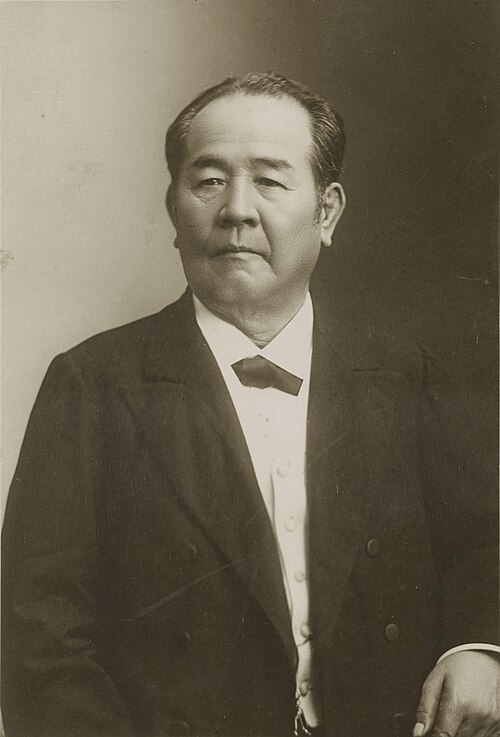
Fukuzawa Yukichi (1835–1901) was the foremost enlightenment thinker, educator and journalist of Meiji Japan and the founder of Keiō Gijuku, forerunner of Keio University. Through Conditions in the West, An Encouragement of Learning and An Outline of a Theory of Civilization he introduced Western civilisation and promoted the spirit of "independence and self-respect". His portrait was on the 10,000-yen note from 1984 to 2024.
- Birthplace
- Nakatsu domain storehouse residence, Osaka
- Origin
- Low-ranking samurai of Nakatsu domain (now Ōita)
- Field
- Enlightenment thought, education, journalism

Family and youth
Fukuzawa Yukichi was born on the 12th day of the 12th month of Tenpō 5 (10 January 1835) at the Nakatsu domain's storehouse residence in Osaka, the youngest child of Fukuzawa Hyakusuke, a low-ranking samurai who managed the warehouse. His father died when he was about eighteen months old, and his mother took the children back to Nakatsu (now Ōita Prefecture).
In the domain's rigid hierarchy, low-ranking samurai families had almost no chance to rise. In his autobiography he wrote that the feudal system of rank was "my father's enemy", an experience at the root of his later belief in equality and individual independence.
In 1854 he went to Nagasaki to study Dutch learning, and in 1855 entered the Tekijuku school of the physician Ogata Kōan in Osaka, where his diligence made him head student.
From Dutch to English, and three journeys West
In 1858 Nakatsu sent him to Edo to teach Dutch at the domain's residence in Tsukiji Teppōzu, regarded as the origin of Keiō Gijuku. Visiting newly opened Yokohama in 1859, he was shocked to find he could not read the signs, because the common language was English, not Dutch; he immediately began teaching himself English.
In 1860 he sailed on the Kanrin Maru, the first Japanese ship to cross the Pacific, to San Francisco with a shogunate mission. In 1862 he served as interpreter on the shogunate's mission to Europe, visiting six countries including France, Britain, the Netherlands, Prussia, Russia and Portugal, and in 1867 he went to the United States again.
On these journeys he studied not only machines but hospitals, banks, post offices, parliaments, newspapers and insurance – the institutions underpinning Western society. He also worked for the shogunate translating diplomatic documents.
Keiō Gijuku and the enlightenment works
In 1866 he published Seiyō jijō (Conditions in the West), describing Western politics, economics, education and daily life; it sold widely and became a handbook for Restoration leaders. In 1868 he named his school Keiō Gijuku after the Keiō era; while cannon fired in the Battle of Ueno, he carried on with his economics lecture.
From 1872 to 1876 he published the 17 parts of Gakumon no susume (An Encouragement of Learning). Its famous opening says heaven creates no one above or below another; but he goes on to argue that differences between rich and poor, high and low, come from learning – so everyone must pursue jitsugaku, practical learning useful in life. Total copies are said to have reached the millions, an enormous figure for Japan's population then.
His Bunmeiron no gairyaku (An Outline of a Theory of Civilization, 1875) set out a theory of civilisational progress, arguing that Japan's goal was to preserve its independence by absorbing the spirit of Western civilisation. He also joined the Meirokusha (1873), the leading circle of enlightenment intellectuals.
Journalism and later years
Fukuzawa repeatedly declined government office, holding that intellectuals should stay outside the state to keep an independent voice. In 1882 he founded the newspaper Jiji Shinpō, writing editorials on politics, economics, foreign affairs and women's rights. He also helped introduce double-entry bookkeeping and public speaking (enzetsu) to Japan, building the Enzetsukan speech hall at Mita in 1875.
He strongly supported women's education and criticised concubinage. In 1899 he published his lively Autobiography, translated into many languages. After a cerebral haemorrhage in 1898 he died of a recurrence on 3 February 1901 in Tokyo and was buried at Jōkō-ji in Shinagawa.
Ideas and controversies
At the heart of Fukuzawa's thought is dokuritsu jison, independence and self-respect: only independent individuals make an independent nation. He championed empirical and scientific thinking, attacked formalistic Confucianism and servility to authority, and is often called "the teacher of modern Japan".
His legacy is also contested. The unsigned 1885 Jiji Shinpō editorial Datsu-A ron (On Leaving Asia), usually attributed to him, urged Japan to "leave Asia" and treat China and Korea as the Western powers did, and he supported the Sino-Japanese War. In Korea and China he is often criticised as a proponent of aggression, while some Japanese scholars argue the piece must be read against the failure of Korean reformers in 1884 and that its importance has been exaggerated. The debate continues.
Legacy
Keiō Gijuku grew into Keio University (recognised as a university under the University Ordinance in 1920), regarded with Waseda as one of Japan's two leading private universities. Keio commemorates the anniversary of his death, 3 February, as Yukichi-ki. His former home in Nakatsu, Ōita, is now the Fukuzawa Memorial Hall.
His portrait was on the 10,000-yen note from 1984 for 40 years, so "Yukichi" became slang for a 10,000-yen bill. Since 3 July 2024 the new note features Shibusawa Eiichi.
Connection with Vietnam
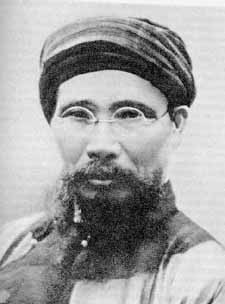
Keiō Gijuku is regarded as an inspiration for the Đông Kinh Nghĩa Thục (Tonkin Free School), founded in Hanoi in 1907 by Lương Văn Can, Nguyễn Quyền and other reformist scholars; even the term nghĩa thục corresponds to gijuku in Fukuzawa's school name. Phan Bội Châu encountered Japanese enlightenment thought during his Đông Du years. An Encouragement of Learning has been translated into Vietnamese.
Japanese corner
澤 is the old form of 沢, so his name is written 福澤諭吉 or 福沢諭吉 (Fukuzawa Yukichi). In 学問のすゝめ the mark ゝ repeats the preceding kana, so it reads gakumon no susume.
Vocabulary: 独立自尊 (dokuritsu jison, independence and self-respect), 実学 (jitsugaku, practical learning), 蘭学 (rangaku, Dutch learning), 演説 (enzetsu, public speech – a word he popularised), 義塾 (gijuku, private academy), 一万円札 (10,000-yen note), 脱亜論 (Datsu-A ron), 咸臨丸 (Kanrin Maru).
天は人の上に人を造らず人の下に人を造らずと言えり
— Fukuzawa Yukichi