History & society · 世界名人
Socrates ソクラテス
そくらてす
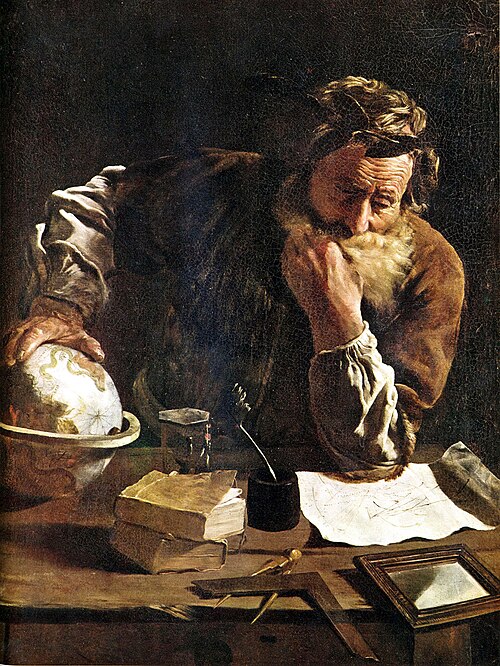
Socrates (c. 470–399 BC) was an ancient Greek philosopher of Athens, widely regarded as a founder of Western moral philosophy. He wrote nothing; what we know of him comes from his followers Plato and Xenophon and from a comedy by Aristophanes. In 399 BC an Athenian jury sentenced him to death, and he died by drinking hemlock.
- Birthplace
- Alopece, Athens (Greece)
- Parents
- Sophroniscus (stonemason) and Phaenarete (midwife)
- Family
- Wife Xanthippe; three sons
Background and early life
Socrates was born around 470 BC in Alopece, a district just south of Athens, when the city was at its height after its victories over Persia. His father Sophroniscus was a stonemason and his mother Phaenarete a midwife. Socrates later compared his own work to hers: he did not hand people knowledge but acted as a midwife to ideas already inside them.
He was not an aristocrat and lived modestly. Ancient sources describe him as unattractive, snub-nosed and bulging-eyed, often barefoot and wearing the same old cloak all year. Probably in his fifties he married Xanthippe, with whom he had three sons, Lamprocles, Sophroniscus and Menexenus. Her later reputation as a shrew rests largely on anecdote.
Soldier and citizen
Like every male citizen of Athens, Socrates served in the army. According to Plato he fought as a hoplite in the Peloponnesian War at Potidaea, in the retreat from Delium and at Amphipolis (422 BC). He was known for enduring cold and is said to have saved Alcibiades' life at Potidaea.
He avoided politics but twice stood firm against the majority and against power. In 406 BC, serving on the council, he opposed the illegal collective trial of the generals after the battle of Arginusae. Under the Thirty Tyrants (404–403 BC) he refused an order to arrest an innocent citizen for execution.
The Delphic oracle and the Socratic method
In Plato's Apology, his friend Chaerephon asked the oracle at Delphi whether anyone was wiser than Socrates and was told no one was. Puzzled, Socrates questioned politicians, poets and craftsmen reputed to be wise. He concluded that they thought they knew things they did not, while he at least knew that he did not know.
His technique, the elenchus or Socratic method, was to ask someone to define a concept such as courage, justice or virtue and then pose small follow-up questions until a contradiction emerged. Conversations often ended in aporia, an impasse, but forced participants to rethink their beliefs. The method is still used in law schools and in teaching critical thinking.
Ideas
Unlike earlier thinkers who studied the nature of the cosmos, Socrates turned philosophy toward human life: how to live rightly and what makes a good person. The Delphic maxim "Know thyself" was central to his thinking, and he held that caring for the soul mattered more than wealth or reputation.
Views commonly attributed to him include that virtue is a kind of knowledge, that no one does wrong willingly and wrongdoing comes from ignorance, and that it is better to suffer injustice than to commit it. He also spoke of a daimonion, an inner voice that held him back from wrong actions. Because he wrote nothing, scholars still debate which ideas are his and which Plato put in his mouth, the so-called Socratic problem.
Trial and death
In 399 BC, shortly after Athens' defeat by Sparta and the rule of the Thirty, Meletus, Anytus and Lycon charged Socrates with impiety and corrupting the young. The fact that some of his associates, such as Alcibiades and Critias, had harmed the city probably fed suspicion of him. Before a jury of hundreds of citizens he did not plead for mercy but defended his way of life, and a majority found him guilty.
Sentenced to death, he refused an escape plan prepared by friends, arguing that a citizen should not break the city's laws. Plato's Phaedo describes him drinking the hemlock calmly while discussing the immortality of the soul. His statement at the trial, as reported in Plato's Apology, that "the unexamined life is not worth living" became his best-known saying.
Legacy
Through Plato and Plato's student Aristotle, Socrates became a turning point for all of Western philosophy; thinkers before him are known collectively as the Presocratics. Several ancient schools, including the Cynics and the Stoics, claimed him as their model.
Judgments of him vary. Aristophanes' comedy The Clouds mocked him as an eccentric sophist, and some modern writers such as I. F. Stone argued that he was contemptuous of Athenian democracy. Even so, his image as a man who chose death over betraying his conscience and his freedom to question has led him to be ranked alongside Confucius, the Buddha and Jesus among humanity's great teachers.
Socrates in Vietnam and Japan
In Vietnam, Socrates is part of introductory philosophy courses at university and appears in many popular books on thinking skills; the "Socratic method" is a familiar term among teachers. Plato's dialogues such as the Apology and Phaedo are available in Vietnamese.
In Japan he is often counted among the "Four Sages" (shisei) with the Buddha, Confucius and Jesus, a grouping popularized from the Meiji era. The phrase muchi no chi (knowing one's ignorance) is taught to Japanese high school students in the ethics (rinri) course.
Japanese corner
Name: ソクラテス (Sokuratesu). Plato is プラトン and Aristotle アリストテレス.
Key words: 哲学 (tetsugaku, philosophy), 無知の知 (muchi no chi, knowing one's ignorance), 問答法 (mondōhō, Socratic method), 産婆術 (sanbajutsu, maieutics), 対話 (taiwa, dialogue), 汝自身を知れ (nanji jishin o shire, know thyself), 毒杯 (dokuhai, cup of poison).
吟味されない生は生きるに値しない。
— Socrates