
Reactions & substances · Chemistry
Catalyst 触媒
しょくばい
A catalyst speeds up a reaction without being used up, by opening a pathway that needs less energy.
- Term coined by
- Jöns Jacob Berzelius (1835)
- Examples
- Enzymes, car catalytic converters
How does a catalyst work?
Every reaction must climb an energy "hill" called the activation energy. A catalyst is like digging a tunnel through the hill, letting more particles react at the same temperature.
A classic experiment
Hydrogen peroxide (H2O2) decomposes very slowly. Add a little manganese dioxide and oxygen bubbles vigorously, while the MnO2 remains unchanged afterwards.
Enzymes: biological catalysts
In the body, enzymes make reactions fast at body temperature. Amylase in saliva breaks down starch, which is why rice tastes sweet if you chew it long.
Catalysts in industry and the environment
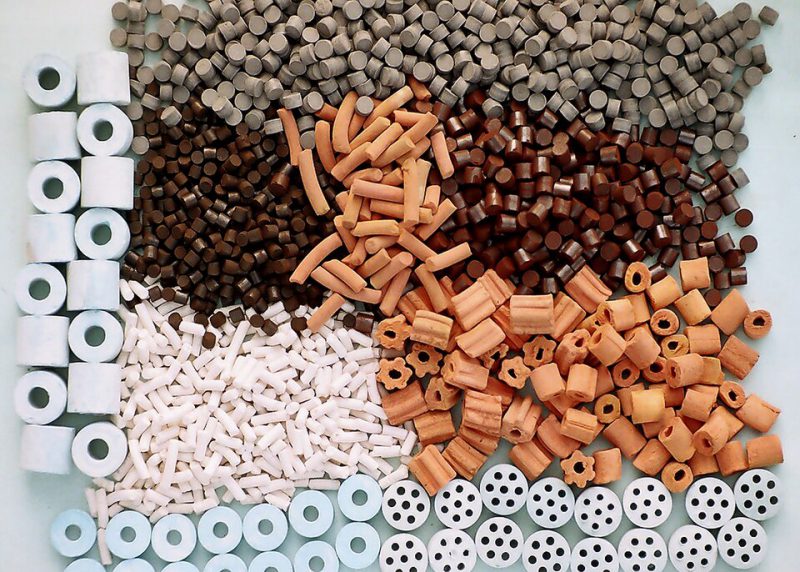
Most industrial chemicals rely on catalysts, such as iron catalysts for making ammonia. Car catalytic converters use platinum and palladium to turn toxic CO into CO2.
Japanese – English terms
触媒 (しょくばい) – catalyst; 活性化エネルギー (かっせいかエネルギー) – activation energy; 酵素 (こうそ) – enzyme; 過酸化水素 (かさんかすいそ) – hydrogen peroxide; 二酸化マンガン (にさんかマンガン) – manganese dioxide; 分解 (ぶんかい) – decomposition.