
Reactions & substances · Chemistry
Polymer 高分子
こうぶんし
Polymers are very large molecules made of many small repeating units (monomers) linked like beads on a string. Plastics, rubber, fibres, starch and proteins are polymers.
- Pioneer
- Hermann Staudinger
- Types
- Natural, synthetic
- Examples
- PE, PVC, nylon, rubber
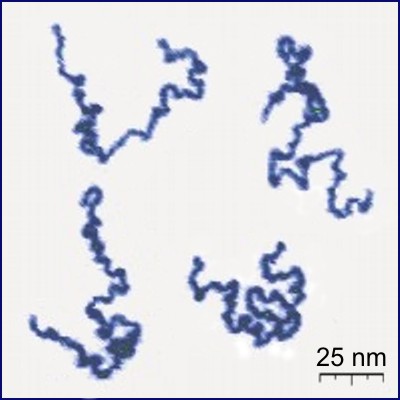
Monomers and polymers
Like paper clips hooked into a long chain, thousands of ethylene molecules join to form polyethylene, the plastic in shopping bags. The prefix "poly" means "many".
Addition and condensation
Addition polymerization joins monomers with double bonds without by-products (making PE, PVC). Condensation polymerization joins monomers while releasing small molecules like water (making nylon, PET).
Natural polymers
Nature made polymers long ago: starch in rice, cellulose in wood and cotton, protein in silk, and DNA carrying genetic information are all polymers.
Synthetic polymers
In the 20th century people created many new polymers: nylon (1935) for stockings and rope, Teflon for non-stick pans, synthetic rubber for tyres. They are light, durable and cheap, but many hardly break down in nature.
Japanese – English terms
高分子 (こうぶんし) – polymer; 単量体 (たんりょうたい) – monomer; 付加重合 (ふかじゅうごう) – addition polymerization; 縮合重合 (しゅくごうじゅうごう) – condensation polymerization; 合成繊維 (ごうせいせんい) – synthetic fibre; 天然ゴム (てんねんゴム) – natural rubber.