
Reactions & substances · Chemistry
Chemical reaction 化学反応
かがくはんのう
A chemical reaction is a process in which starting substances turn into new substances with different properties as bonds between atoms break and re-form.
- Key law
- Conservation of mass (Lavoisier)
- Signs
- Colour change, gas, precipitate, heat
- Examples
- Burning, rusting, cooking
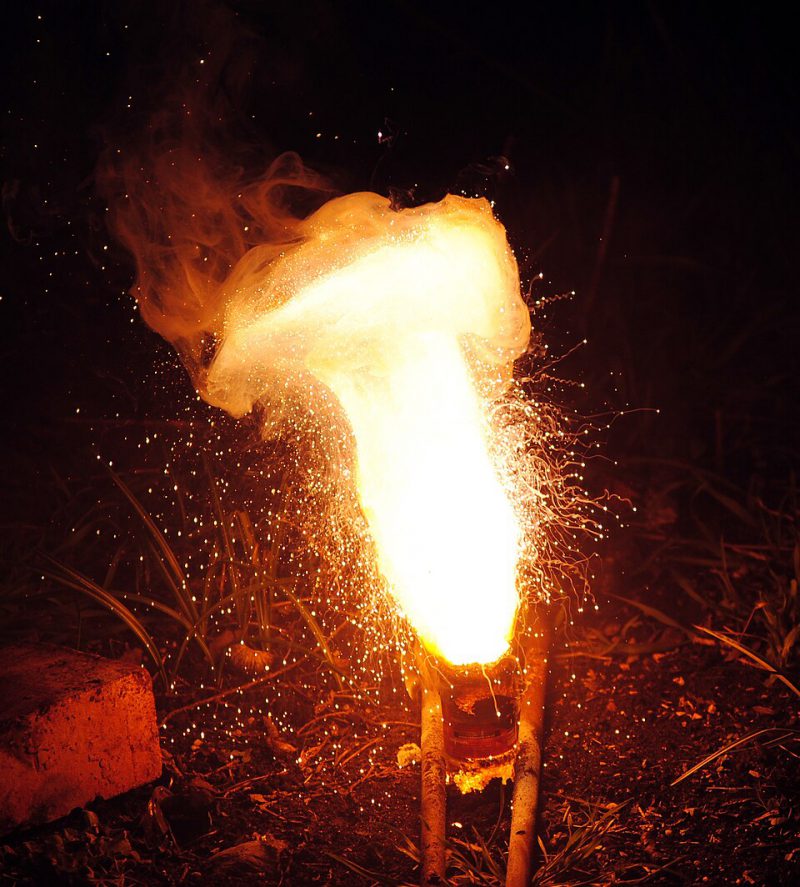
Chemical vs physical change
Ice melting into water is a physical change because it is still H2O. Burning paper turns it into ash, CO2 and water vapour: a chemical change, since new substances form.
How to recognize a reaction
Signs of a reaction include a colour change (a cut apple browning), gas bubbles (vinegar with baking soda), a precipitate, or heat and light (a burning match).
Chemical equations
Reactions are written as equations, e.g. CH4 + 2O2 → CO2 + 2H2O (burning natural gas). Each element must have the same number of atoms on both sides, since by the law of conservation of mass atoms are neither created nor destroyed.
Reaction rate
Reactions go faster with higher temperature, higher concentration, smaller solid pieces or a catalyst. That is why food lasts longer in the fridge and powdered coal burns faster than lumps.
Japanese – English terms
化学反応 (かがくはんのう) – chemical reaction; 化学反応式 (かがくはんのうしき) – chemical equation; 反応物 (はんのうぶつ) – reactant; 生成物 (せいせいぶつ) – product; 質量保存の法則 (しつりょうほぞんのほうそく) – law of conservation of mass; 反応速度 (はんのうそくど) – reaction rate.