
Atoms & bonds · Chemistry
Isotope 同位体
どういたい
Isotopes are atoms of the same element with the same number of protons but different numbers of neutrons, and so different masses.
- Named by
- Frederick Soddy (1913)
- Example
- Carbon-12, carbon-14
- Uses
- Dating, medicine, energy
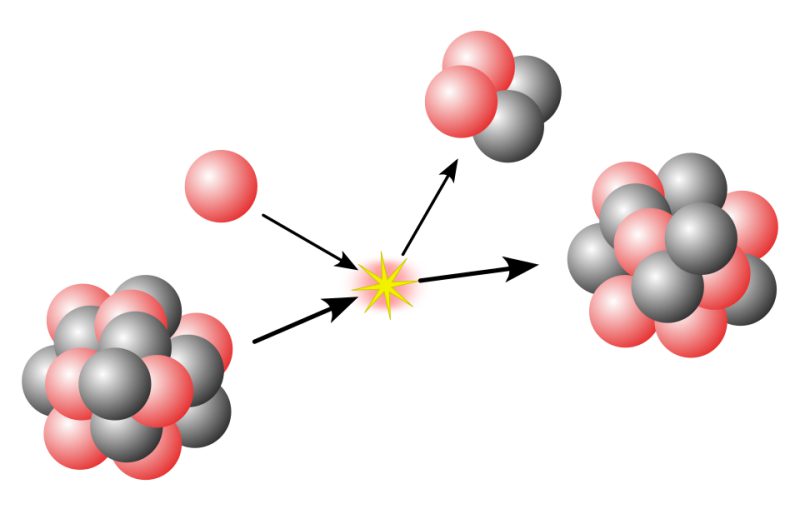
Same element, different mass
Ordinary hydrogen has 1 proton and no neutron. Deuterium has one neutron and tritium has two. All three are hydrogen because each has one proton, and they behave almost identically in chemistry.
Stable and radioactive isotopes
Many isotopes are stable forever. Others are unstable, decaying and emitting radiation; these are radioactive isotopes. The time for half of a sample to decay is the half-life.
Carbon-14 dating
Living things take in carbon-14 from their surroundings. After death it decays with a half-life of about 5,700 years. By measuring what remains, archaeologists estimate the age of old bones and wood.
Other uses
In medicine, radioactive isotopes are used in diagnostic imaging. Uranium-235 fuels nuclear power plants. Oxygen isotope ratios in ice help scientists study past climates.
Japanese – English terms
同位体 (どういたい) – isotope; 放射性同位体 (ほうしゃせいどういたい) – radioisotope; 半減期 (はんげんき) – half-life; 重水素 (じゅうすいそ) – deuterium; 年代測定 (ねんだいそくてい) – dating; 放射線 (ほうしゃせん) – radiation.