
Ancient world · World history
Ancient Egypt 古代エジプト
こだいえじぷと
Ancient Egypt was a civilization along the Nile that lasted about 3,000 years, famous for its pharaohs, pyramids, hieroglyphs and mummification.
- Period
- c. 3100 BC – 30 BC
- Ruler
- Pharaoh (king regarded as divine)
- Famous monuments
- Pyramids of Giza, Great Sphinx
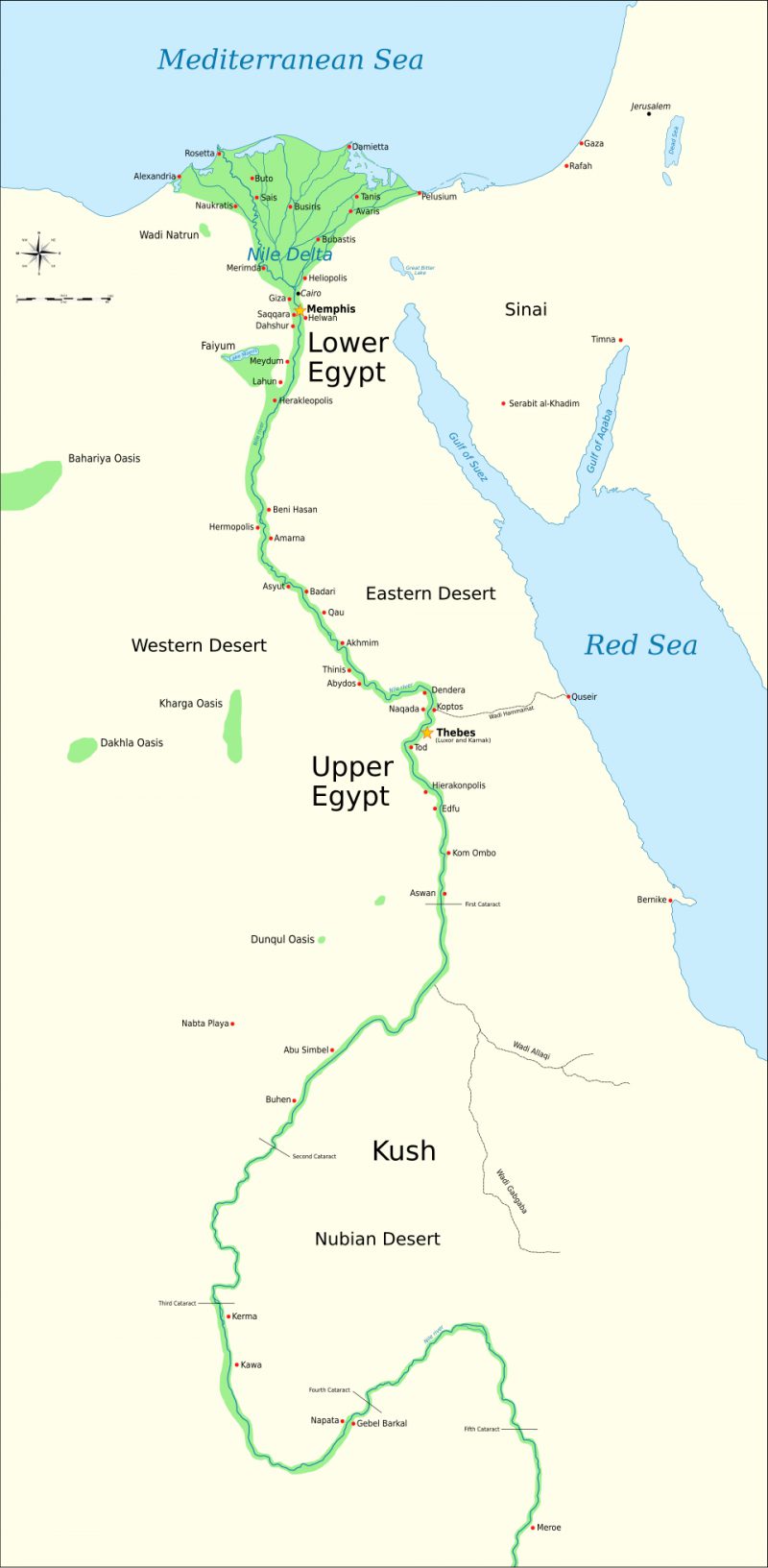
The gift of the Nile
The Greek historian Herodotus called Egypt "the gift of the Nile". Each year the river flooded and left fertile silt. Egyptians grew wheat and barley and had to re-measure fields after each flood, which advanced mathematics and geometry.
Around 3100 BC Upper and Lower Egypt were united into one kingdom. Egyptian history is usually divided into the Old, Middle and New Kingdoms.
Pharaohs and pyramids
The pharaoh was seen as a living god with absolute power. In the Old Kingdom pharaohs built pyramids as tombs. The largest, at Giza, was built for King Khufu around the 26th century BC.
Egyptians believed in life after death, so they mummified bodies to preserve them. The tomb of Tutankhamun, found in 1922, revealed the wealth of the New Kingdom.
Writing, calendar and legacy
Hieroglyphs used pictures to represent sounds and ideas. Egyptians wrote on papyrus, the origin of the word "paper". The Rosetta Stone, found in 1799, helped Champollion decipher hieroglyphs in 1822.
Egyptians devised a 365-day calendar based on the Nile floods and the star Sirius. In 30 BC, after the death of Queen Cleopatra VII, Egypt became a Roman province.
Japanese – English terms
ピラミッド (ぴらみっど): pyramid; ファラオ (ふぁらお): pharaoh; ヒエログリフ (ひえろぐりふ): hieroglyph; ミイラ (みいら): mummy; 太陽暦 (たいようれき): solar calendar; パピルス (ぱぴるす): papyrus.