
Ancient world · World history
Ancient India 古代インド
こだいいんど
Ancient India began with the Indus Valley Civilization (c. 2600–1900 BC), followed by the Vedic age with its caste system, the birth of Buddhism and the Maurya and Gupta empires.
- Period
- c. 2600 BC – 6th century AD
- Religions born
- Brahmanism (root of Hinduism), Buddhism, Jainism
- Achievements
- Numerals and zero, planned cities
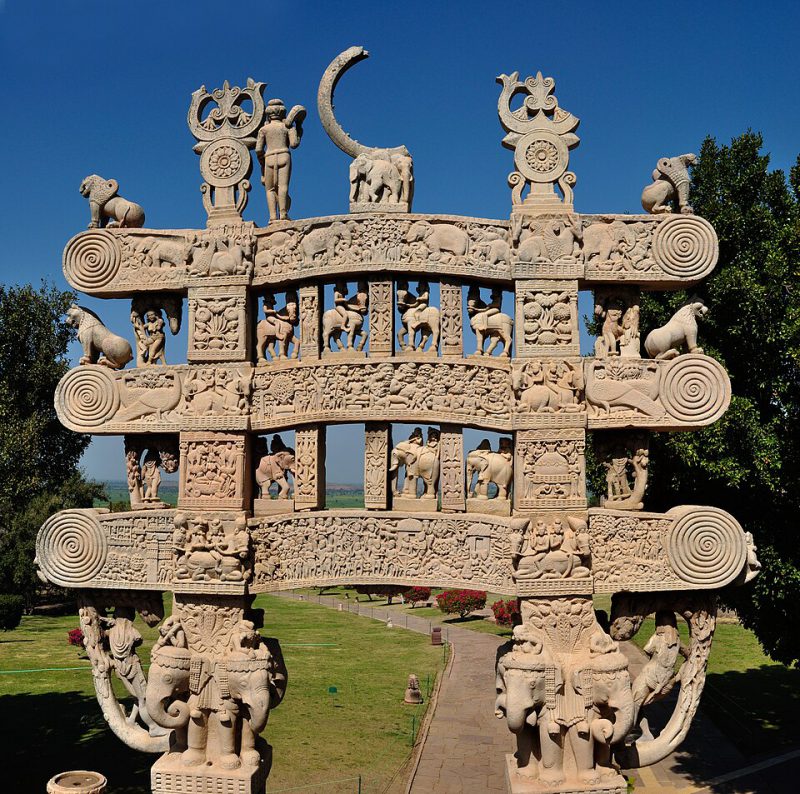
The Indus Valley Civilization
Cities such as Harappa and Mohenjo-daro (in modern Pakistan) had grid-like streets, baked-brick houses, drainage systems and public baths, showing remarkable urban planning.
The Indus people had a script carved on seals that has never been deciphered. The civilization declined around 1900 BC; the causes are debated, possibly climate change and shifting rivers.
The Vedic age and the caste system
Around 1500 BC Indo-Aryan-speaking peoples migrated into northwest India. Their Vedas became the basis of Brahmanism. Society was divided into four varnas: Brahmins (priests), Kshatriyas (rulers and warriors), Vaishyas (merchants and farmers) and Shudras (laborers).
This later developed into the complex caste system with lasting effects on Indian society; India's modern constitution prohibits caste discrimination.
Buddhism and the empires
Around the 6th–5th century BC, Siddhartha Gautama (the Buddha) taught a path to end suffering open to all castes. Buddhism later spread to Southeast Asia, China and Japan.
The Maurya Empire unified most of India; King Ashoka (3rd century BC) supported Buddhism. The Gupta era (4th–6th centuries) is seen as a golden age: a numeral system with zero developed in India and passed through the Islamic world to Europe, becoming the "Arabic numerals" we use today.
Japanese – English terms
インダス文明 (いんだすぶんめい): Indus Valley Civilization; カースト制度 (かーすとせいど): caste system; バラモン教 (ばらもんきょう): Brahmanism; 仏教 (ぶっきょう): Buddhism; ヒンドゥー教 (ひんどぅーきょう): Hinduism; ゼロ (ぜろ): zero.