
Core ideas · Mathematics
Zero 零
れい
Zero is both a placeholder digit in the decimal system and a number meaning "nothing". Treating 0 as a true number was developed clearly in ancient India.
- Developed in
- India (Brahmagupta, AD 628)
- Roles
- Placeholder, additive identity
Two roles of zero
In 205, the 0 shows the tens place is empty; without it we would confuse it with 25. Zero is also a number: 5 − 5 = 0, and adding 0 leaves any number unchanged.
History
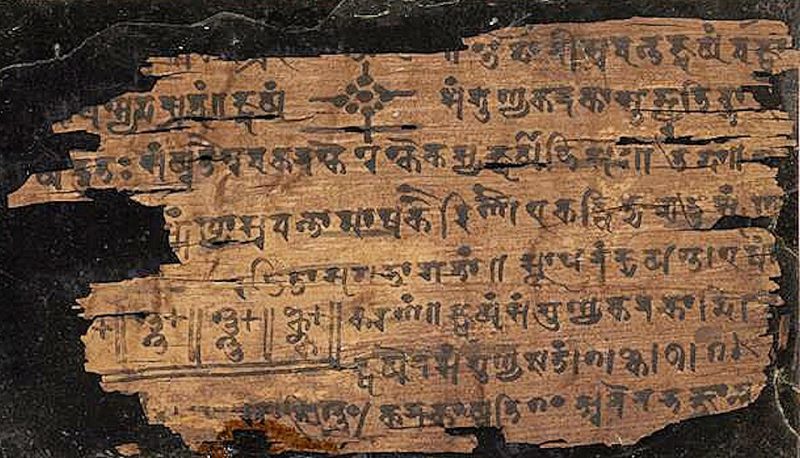
Babylonians and Maya used placeholder signs. In 628 the Indian mathematician Brahmagupta gave rules for calculating with zero. Through the Arab world the numerals reached Europe, helped by Fibonacci's 1202 book.
Division by zero
Why is 6 ÷ 0 meaningless? If 6 ÷ 0 = x then x × 0 = 6, but anything times 0 is 0. So division by zero is undefined, and calculators show an error.
Zero in technology
Computers store all information using the two digits 0 and 1 (binary). Without zero there would be no compact place-value system and hardly any modern computing.
Japanese – English terms
Key terms (Japanese – English – Vietnamese): 零 (れい) – zero – số không; 位取り記数法 (くらいどりきすうほう) – place-value notation – hệ ghi số theo vị trí; 十進法 (じっしんほう) – decimal system – hệ thập phân; 二進法 (にしんほう) – binary system – hệ nhị phân; 割り算 (わりざん) – division – phép chia.