
Core ideas · Mathematics
Infinity 無限
むげん
Infinity (∞) is the idea of something without bound, larger than any number. Mathematics shows that there are different sizes of infinity.
- Symbol ∞
- John Wallis (1655)
- Studied sizes of infinity
- Georg Cantor
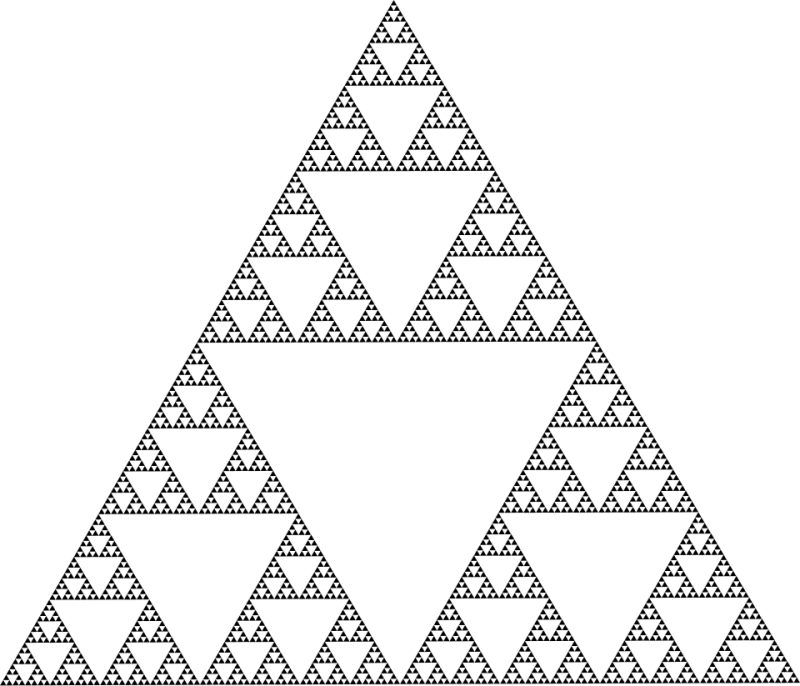
Not an ordinary number
No matter how long you count 1, 2, 3… you never reach infinity. So ∞ is not used like an ordinary number; ∞ − ∞, for instance, has no definite value.
Infinity in limits
As x grows, 1/x gets closer to 0, so its limit as x goes to infinity is 0. The sum 1/2 + 1/4 + 1/8 + … has infinitely many terms yet equals exactly 1, like always walking half the remaining distance.
Hilbert's hotel
A hotel with infinitely many rooms is full. A new guest arrives? Move each guest from room n to room n + 1 and room 1 is free. This thought experiment shows infinity behaves unlike finite numbers.
Sizes of infinity
Cantor proved the natural numbers and the rational numbers are "equally many", but the real numbers are strictly more and cannot be counted. Some infinities are bigger than others.
Japanese – English terms
Key terms (Japanese – English – Vietnamese): 無限 (むげん) – infinity – vô hạn, vô cực; 無限大 (むげんだい) – infinity (∞) – vô cực; 極限 (きょくげん) – limit – giới hạn; 無限級数 (むげんきゅうすう) – infinite series – chuỗi vô hạn; 収束 (しゅうそく) – convergence – hội tụ; 集合 (しゅうごう) – set – tập hợp.