
Planet Earth · Earth & the universe
Earthquakes 地震
じしん
An earthquake is the shaking of the ground when rock in Earth's crust suddenly breaks and slips, releasing energy as seismic waves.
- Measures
- Magnitude, seismic intensity
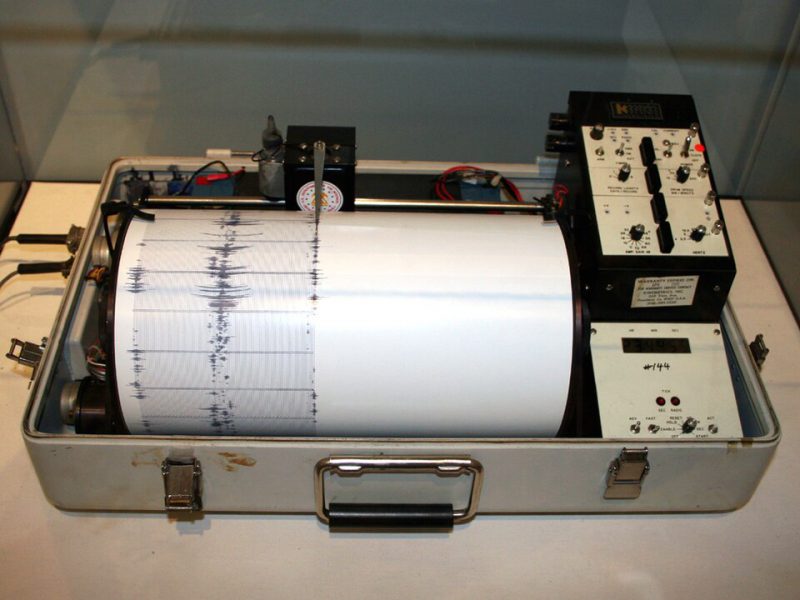
- Instrument
- Seismograph
- Related hazards
- Tsunamis, landslides, liquefaction
Why earthquakes happen
Plates constantly push on each other but friction holds them. Stress builds like bending a plastic ruler; when it exceeds the rock's strength, the rock snaps and rebounds, sending out vibrations. The starting point underground is the hypocentre; the point above it on the surface is the epicentre.
Magnitude and intensity
Magnitude expresses the total energy of a quake; each step of 1 means about 32 times more energy. Intensity describes how strongly the ground shakes at a particular place; Japan uses the shindo scale from 0 to 7. One quake has a single magnitude but many intensities, just as a bulb has one wattage yet looks dimmer from farther away.
Preparedness
The exact time of an earthquake cannot yet be predicted. Japan's early warning system detects the faster P waves to give a few seconds' notice before strong shaking. During a quake, get under a table, protect your head and stay away from windows.
Japanese – English terms
Vocabulary: 地震 (じしん) – earthquake; 震源 (しんげん) – hypocentre; 震央 (しんおう) – epicentre; 震度 (しんど) – seismic intensity; マグニチュード – magnitude; 余震 (よしん) – aftershock; 緊急地震速報 (きんきゅうじしんそくほう) – earthquake early warning.