
Planet Earth · Earth & the universe
Volcanoes 火山
かざん
A volcano is where magma from inside Earth reaches the surface as lava, ash and gas. Volcanoes cause disasters but also create fertile soil, hot springs and geothermal energy.
- Where found
- Plate boundaries, hot spots
- Famous examples
- Mount Fuji, Vesuvius, Kilauea
- In Vietnam
- Extinct volcanoes, basalt soils of the Central Highlands
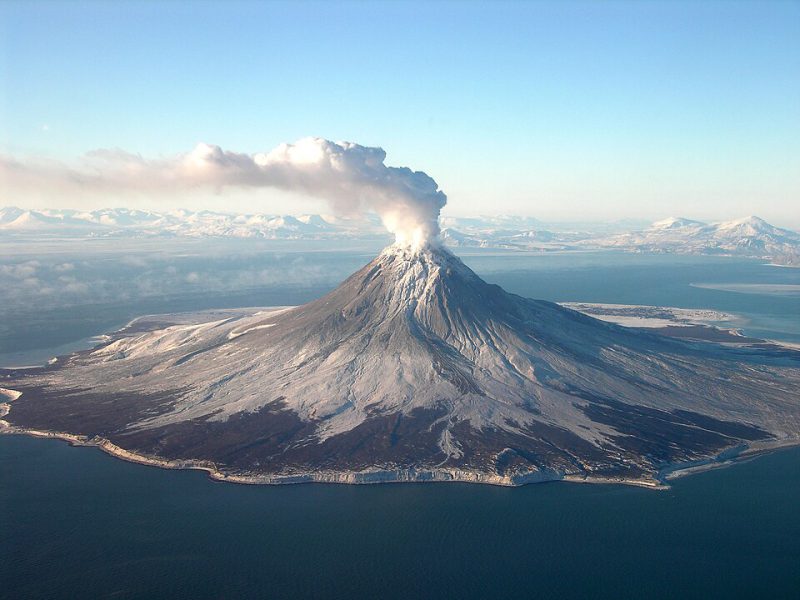
How volcanoes form
Mantle rock partly melts into magma, which is lighter than surrounding rock, rises and collects in a magma chamber. When gas pressure builds enough, like opening a shaken soda bottle, it erupts. Most volcanoes lie along plate boundaries, especially the Pacific Ring of Fire; some, like Hawaii, sit over hot spots.
Types of eruption
Runny, gas-poor magma (as in Hawaii) flows gently, building broad shield volcanoes. Thick, gas-rich magma explodes violently, blasting ash high and sometimes producing deadly pyroclastic flows. Mount Fuji is a classic cone-shaped stratovolcano built from layers of lava and ash.
Benefits and risks
Volcanic material weathers into fertile soil, such as the red basalt soils of Vietnam's Central Highlands where coffee grows. Underground heat gives hot springs and geothermal power. Yet big eruptions can destroy cities, as Vesuvius buried Pompeii in AD 79, and high ash disrupts flights.
Japanese – English terms
Vocabulary: 火山 (かざん) – volcano; マグマ – magma; 溶岩 (ようがん) – lava; 噴火 (ふんか) – eruption; 火山灰 (かざんばい) – volcanic ash; 火砕流 (かさいりゅう) – pyroclastic flow; 温泉 (おんせん) – hot spring.