
Stars & the cosmos · Earth & the universe
Black holes ブラックホール
ぶらっくほーる
A black hole is a region where gravity is so strong that not even light can escape. They form when very massive stars collapse, and supermassive ones sit at the centres of most galaxies.
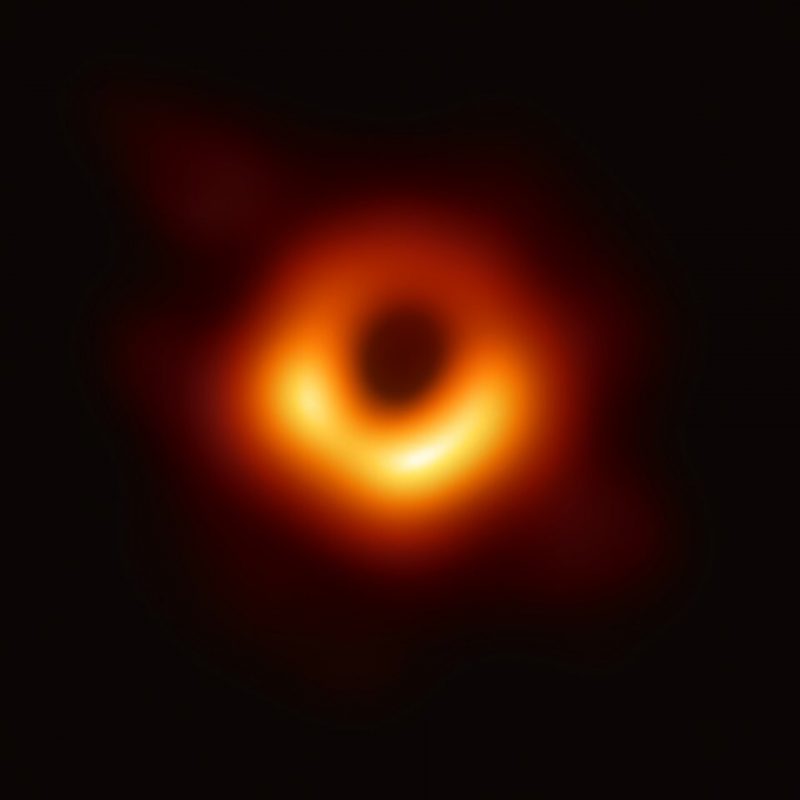
- First image
- 2019, galaxy M87 (Event Horizon Telescope)
- Milky Way's black hole
- Sagittarius A*
- Boundary
- Event horizon
What a black hole is
Throw a ball upward: the faster you throw, the higher it goes. Escaping Earth needs about 11.2 km/s. In a black hole matter is so compressed that the escape speed exceeds the speed of light, so nothing gets out. The point of no return is the event horizon.
Formation and types
Stellar-mass black holes form when the core of a very massive star collapses in a supernova. Supermassive black holes, millions to billions of times the Sun's mass, sit at galaxy centres; how they formed is still being studied.
How we see them
Black holes emit no light, but gas spiralling in heats up and gives off X-rays. Scientists have detected gravitational waves from merging black holes (first in 2015) and imaged a black hole's shadow with a worldwide network of radio telescopes.
Japanese – English terms
Vocabulary: ブラックホール – black hole; 事象の地平面 (じしょうのちへいめん) – event horizon; 重力波 (じゅうりょくは) – gravitational wave; 相対性理論 (そうたいせいりろん) – theory of relativity; 光速 (こうそく) – speed of light; 電波望遠鏡 (でんぱぼうえんきょう) – radio telescope.