
The solar system · Earth & the universe
Jupiter 木星
もくせい
Jupiter is the largest planet, a gas giant made mostly of hydrogen and helium, famous for its Great Red Spot and many moons.
- Type
- Gas giant
- Size
- About 11 times Earth's diameter
- Large moons
- Io, Europa, Ganymede, Callisto
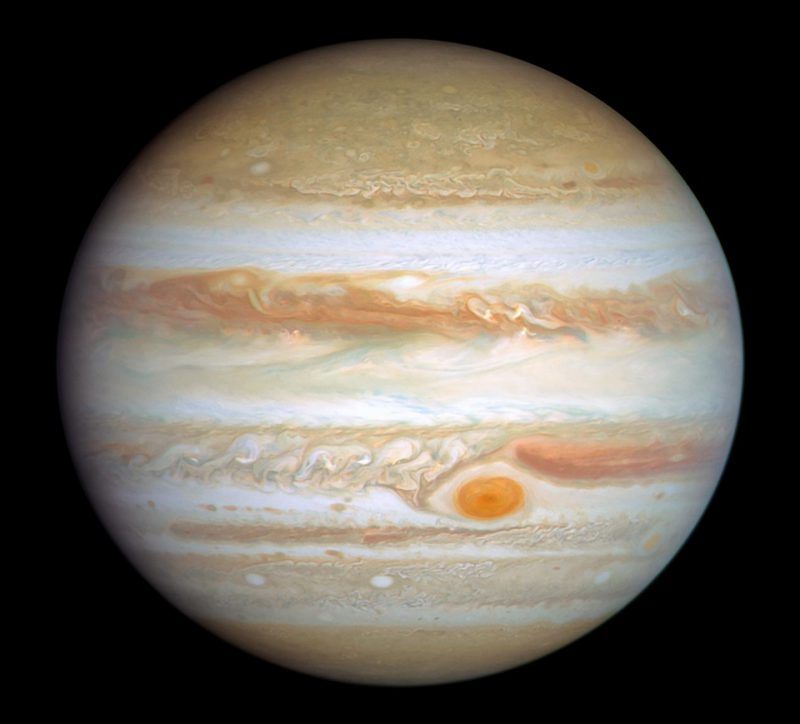
A world of gas
Jupiter has no solid surface like Earth's. Its coloured bands are cloud belts moving in opposite directions. The Great Red Spot is a giant storm wider than Earth that has lasted for at least centuries.
The Galilean moons
In 1610 Galileo discovered Jupiter's four big moons. Io is the most volcanically active body known, Ganymede is the largest moon (bigger than Mercury), and Europa hides a salty ocean under its ice that might suit life.
A shield for the Solar System
Jupiter's strong gravity deflects or captures many comets and asteroids. In 1994 Comet Shoemaker-Levy 9 crashed into Jupiter, the first collision between Solar System bodies ever observed directly.
Japanese – English terms
Vocabulary: 木星 (もくせい) – Jupiter; 巨大ガス惑星 (きょだいガスわくせい) – gas giant; 大赤斑 (だいせきはん) – Great Red Spot; 衛星 (えいせい) – moon; 重力 (じゅうりょく) – gravity; 嵐 (あらし) – storm.