
The solar system · Earth & the universe
Saturn 土星
どせい
Saturn, the second-largest planet, is famous for its bright rings of ice and rock. Its average density is lower than water's.
- Type
- Gas giant
- Largest moon
- Titan
- Key mission
- Cassini (1997–2017)
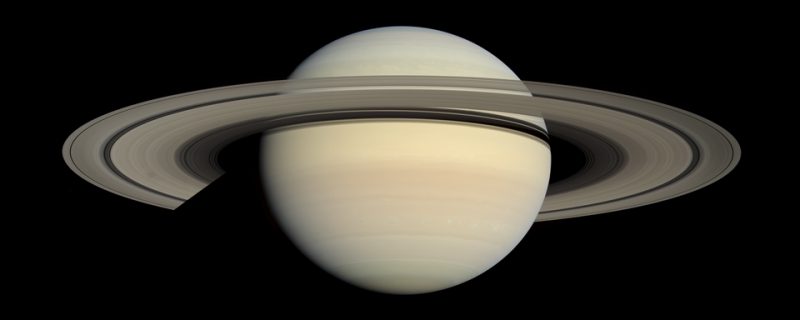
The rings
Saturn's rings span hundreds of thousands of kilometres yet are very thin, made of countless chunks of ice and rock from dust grains to house-sized blocks. From afar they look like a solid disk.
Lighter than water
Made mostly of hydrogen and helium, Saturn has an average density of about 0.7 g/cm³, less than water. People joke that it would float in a big enough bathtub.
Titan and Enceladus
Titan has a thick atmosphere and lakes of liquid methane. Enceladus sprays jets of water from an ocean beneath its ice. Both are fascinating places to study conditions for life.
Japanese – English terms
Vocabulary: 土星 (どせい) – Saturn; 環 (わ) – ring; 密度 (みつど) – density; 氷 (こおり) – ice; 水素 (すいそ) – hydrogen; メタン – methane.